The short answer:
Breakfast isn’t mandatory — but your biology does care about when and how you start fueling your day. The real question isn’t “Should I eat breakfast?” It’s “What does my body need in the morning to feel stable, energized, and grounded?”
🌅 Why Mornings Matter More Than We Think
Your body runs on a 24‑hour rhythm. Cortisol rises naturally in the morning to wake you up, blood sugar is more sensitive, and your brain is shifting from “repair mode” to “go mode.”
Eating (or not eating) interacts with all of that.
If you skip breakfast:
- Cortisol stays higher longer
- Blood sugar may swing more dramatically
- Hunger can “catch up” later in the day
- Cravings for quick carbs increase
- Evening overeating becomes more likely
If you eat breakfast:
- Cortisol comes down more smoothly
- Blood sugar stabilizes
- Hunger stays predictable
- Energy stays more even
- You’re less likely to overeat at night
This is why so many people say, “I’m not hungry in the morning… but I’m starving at night.” That’s physiology talking.
🍳 But Wait — Some People Truly Don’t Need Breakfast
Here’s the nuance most wellness content misses: Not everyone feels best eating first thing.
Some people naturally have:
- Lower morning appetite
- A preference for a later first meal
- A stable blood sugar response even without breakfast
This can be true for:
- People who wake up very early
- People who aren’t in the habit of eating in the morning
- People who eat heavier, later dinners or snack in the evenings
So no — breakfast is not universally required.
🔬 The Real Question: How’s Your Blood Sugar Behavior?
Instead of asking “Should I eat breakfast?” ask:
What happens to me when I skip it?
Do you…
- Get shaky, irritable, or foggy?
- Overeat later?
- Crave sugar or carbs?
- Feel exhausted by mid‑afternoon?
- Snack mindlessly at night?
If yes, your body is telling you breakfast is supportive.
What happens when you do eat breakfast?
Do you…
- Feel more grounded?
- Snack less?
- Have more stable energy?
- Make more balanced choices later?
If yes, breakfast is doing exactly what it’s supposed to.
🥣 What Breakfast Should Look Like (If You Choose to Eat It)
A balanced morning meal isn’t about calories — it’s about blood sugar stability.
Aim for:
- Protein (20–30 g)
- Healthy fats
- Fiber‑rich carbs
- Color (fruit or veg)
Examples:
- Greek yogurt + berries + nuts/seeds + granola
- 2 Egg Banana Pancake Roll-Ups
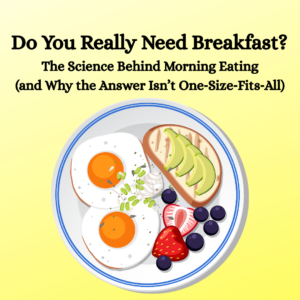
- Eggs + avocado + whole‑grain toast
- Tofu scramble + veggies + potatoes
- Protein smoothie with fruit + chia + nut butter
This combo keeps cortisol in check, supports satiety hormones, and sets the tone for the rest of the day.
🌞The Bottom Line
You don’t have to eat breakfast. But you do need a morning routine that supports your biology.
For many people, that means eating something within 1–3 hours of waking. For others, a later first meal works beautifully.
In my experience most people notice steadier energy, clearer hunger cues, and fewer evening cravings when they start the day with something nourishing and balanced.
The goal isn’t “eat breakfast because you’re supposed to.” It’s fuel your morning in a way that stabilizes your blood sugar, supports your mood, and helps you feel like your best self.

