August is my birthday month.

Even though it falls in the final week, I start to think about it as soon as I turn the calendar over from July.  I appreciate those few weeks for reflection, mental preparation and the occasional mini-bursts of delight that upcoming birthdays can bring.  It may feel silly to admit it, but doesn’t that anticipation and thrill from childhood still live within our souls to some degree?

Birthdays can really make you think about life and how you got where you are.  Like how did I get to be 45?

I imagine life as this long timeline that goes up to 100.  You could live longer but truthfully most people die at some point before then.  I plot my current number and see how far along I’ve come and wonder what I might have left.   Remembering we aren’t here forever serves as a prompt to check in with ourselves and look at where we are and decide how we would like to take it from here.  If everything is good, then great– we can keep doing what we’ve been doing.  But if not– we can ask ourselves if there is anything that we’d like to change.

And so as the years pass, we live and we learn a few things about ourselves and about life, or so I like to think.

While many aspects of existence will always remain a huge mystery, I know I have acquired some valuable lessons that have helped me to become a happier, healthier person who has found peace with food and my body.

More importantly, this desire for a happy, healthy and peaceful relationship with food, eating and body image are very common themes that I see with my clients in my work.  It would be nice if l could just tell them what to eat and that would solve everything.  But there are beliefs and habits that need to be explored, mindsets to question and while nutrition IS about food, it’s also got a lot more to do with who we are as eaters.

3 Nutrition Lessons I Have Learned

1.  Let go of the idea that there is one right way to eat that applies to everyone. 

Please forget about your quest for the perfect diet.

As beautiful as this concept sounds, give up the search for an answer because it doesn’t exist.

I was on this pursuit for many years, believing that I would learn about the most healthful diet in the world and then educate as many people as I could.  It sounded simple enough.

Yet what I discovered was, as much as I’d like to think nutrition science has uncovered all the answers, it has not.  There are certainly a few agreed-upon fundamentals, but there is also a lot of disagreement among the experts.  And if you’re a nutrition-nut like me, you already know– the more you read the research (and how it’s actually done) and the various theories on which foods are going to prevent cancer and which are going to give you heart disease and kill you– that no one really knows.

Health is about so much more than just food– we’ve all heard about some little old lady who is 103 and eats bacon, ice cream and M&Ms every day.   And just as baffling are the sad stories of health-conscious eaters who exercise regularly but suffer a heart attack at 40.   This doesn’t mean you lose all hope though!

I still believe that a whole-foods diet with lots of fruits and vegetables and less sugar, fried foods and refined grains is the way to go.

But… I learned to lighten up on myself when I DID eat some ice-cream or bacon and stopped believing that I was damaging my health.

Quite possibly the stress and worry that I was eating something “not-good-for-me” was more harmful that actually eating that food.

Once I was able to accept that there is no magical formula for a perfect way of eating, I could turn inward and relax into figuring out which foods worked best for ME and my lifestyle.  Now I know what keeps me satisfied and feeling healthy and I eat to support that.  I learned how to keep myself balanced with a diet of mainly beneficial foods while leaving some room for less-healthful-but-oh-so-yummy foods– and it feels amazing to discard the idea of bad/good foods and to eat in the way that feels right to me.


2.  Be kinder to yourself and stop criticizing your body.

I don’t remember exactly when I learned this lesson but it wasn’t until sometime in my 30s.  That is later than ideal but what breaks my heart is that I see women in their 40s, 50s  and 60s who are still hating their bodies.   If you hate your body, do you think it’s going to be easy to eat in a way that’s nourishing and caring for yourself?

Once I shifted my focus from physical appearance to self-care, acceptance, respect and love, eating healthier became so much easier.

I had to learn that there are some things we cannot change, no matter how healthy we eat or how much we exercise.  Just like our height and our shoe size, we are born with genes for a specific body type and we only have a certain range of control over that.  What can really help is to practice transforming all the energy used disliking certain body parts into gratitude for all you have.

Quit doing the things that make you feel bad about yourself (staring at your thighs in the mirror?) and do more of what makes you feel good about who you are (wearing a favorite shirt or pair of shoes!)

Let go of the need to lose weight or change your body.

Also, I learned to forget about what other people think.  Because… they’re not.

As harsh as this sounds, they could care less if you or I don’t have a flawless body.  Humans are extremely self-absorbed. We tend to live in our own heads and largely stay preoccupied with our own stories (which revolve around us of course).  Know anyone like that?  It took me a while to realize that other people are far too wrapped-up with worrying about what other people think of them to be too concerned with me.  And that’s pretty freeing! 

Focus on doing what you want and being who you are.  Don’t be troubled with what you think other people think.


3.  If healthy eating is important to you, you have to make food a priority.

If it’s not, it’s going to be really difficult to eat well.  Everybody is busy with things to do–  I get it.  There are always excuses that can be conjured up to avoid healthy eating.  But recognize that all those items on your long to-do list have various degrees of priority– where is food and eating ranked?  Once you decide it’s got to take precedence and become a bigger focus, you will find the time you thought you didn’t have.  But you have to make that decision for yourself.

If it’s important enough to you, you will make time to do the planning, shopping, preparing, cooking and clean up.

I had to learn how to reprioritize and do all of these things too.  At first they were new and overwhelming, but they quickly became habits that now come naturally and that I even enjoy.

There was a time when I didn’t eat breakfast, rarely kept my kitchen well-stocked with good food and didn’t plan dinners which resulted in making some pretty poor choices for myself.  When I switched from vegan back to omnivore I had no idea how to cook any type of meat– but learning to do this was important to me and so I figured it out.  Start with something small and easy to accomplish and build from there once that one thing becomes a part of your routine.

When you make food a priority in your life you are putting yourself right at the top of your list and isn’t that where you should be?  

All that being said, there will be those “I just don’t care” attitude days when healthy food may not take precedence and this is OK and completely normal.  This absolutely happens to me too.  Some days are tougher than others (PMS, LOL?)   You haven’t made any mistakes or done anything wrong.  Know that there is always another opportunity to choose different foods right around the corner.

There is never going to be a certain moment in time when you’ll be ready to start.

It’s now.

There is no date in the future when you’ll get there.  It’s always now.

Healthy eating is an ongoing journey, not a destination that you reach one day and that’s it.  Keep your priorities clear, know what is important to you and you’ll be heading in the right direction.


A brand new year!  😀

I love that.  Just go back and do what it says if you glossed over it.

Now, how do you feel?  Ahh, that’s better, right!?

Imagine if you could remember to pause and just be for a few seconds here and there throughout your day?    

Happy New Year!  January is that special month when a lot of us decide now is the time to get serious and make those healthy changes we’ve been putting off.  If the fresh new year means another start to a diet that’s bound to fail (as diets tend to do), maybe you need to dig a little deeper and look at what is really keeping you from reaching your goals.  Hint:  It’s not that you haven’t found the perfect diet, it’s got a lot more to do with your daily habits and thought/belief patterns.

Understanding specifically what it is that is getting in your way is the key to change.  If you don’t really think about what exactly is holding you back, then you tend to stay stuck, frustrated and powerless.

I’ve spent some time contemplating what sets apart my clients who reach (or are on the path to reaching) their goals from my clients who have a harder time.

What I’ve found are 3 areas that come up again and again:

1.  Food Planning and Preparation

This is a huge one that stifles all those good intentions of eating a healthier diet.  Unless you are wealthy enough to hire a personal chef, there is no way around it.  Meal planning and preparation is ongoing and yes, it takes some time and effort.  Considering that we have to eat several times a day, every day, this means we have to be meal planning fairly often.  Embrace it rather than fight it and know that it does not have to be a major time-consumer or the difficult task that you might envision.

There are so many convenient food options and shortcuts available that I think we often take for granted how truly lucky we are.  Nearly everyone has a grocery store within a couple of miles with everything necessary to make a decent meal.  Be thankful you don’t have to gut and clean your fish and meats like our ancestors did– do you ever consider how incredible it is that they come neatly packaged and ready to cook?  Fruits and veggies are available pre-cut, spiralized and even riced to eliminate the time it takes to prepare them.  And can you believe people once had to wash and chop up a head of lettuce?  😉

That being said, I will add that even with all these prepared foods, I still think it’s comforting and good for the soul to get into the kitchen as much as possible to chop, slice, dice, bake, experiment, taste and connect to our food more.  Food preparation doesn’t have to be a stressful, hectic event.  It can be meditative if you let it.  Doing the dishes and cleaning up is a perfect time to focus on your breath, slow down and reconnect with yourself.

I understand some schedules make it almost impossible to dedicate much time for cooking at home– but if you decide you want to make it a priority it can certainly be accomplished.

2.  Mindset/Knowing Your “Why”

Mindset has practically everything to do with success.  I am a firm believer of:  ‘You can have anything you want if you put your mind to it.’  But you have to want it more than you want to stay where you are now, as comfortable as your current zone may be.   You also have to clearly understand WHY you want to make changes– you need to see the benefit. 

Because changes ARE going to take effort!  You have to see and believe that the result is worth the work and energy.  And oddly enough, once you put the “work” and “energy” into action you realize that they actually aren’t the horrible work and energy you imagined and feared.  Find the meaning behind what you’re doing and everything flows more naturally.

You also need to keep that “why” flame burning consistently.  Sure, it’ll go out periodically where you’ll say what the hell and indulge in a night of pizza and ice cream.  No biggie. What will make you successful is you’ll know that it’s OK,  you won’t worry about it and you’ll move on.  The next day you’ll be back to your healthy habits, reminding yourself of the person you want to be and how that type of person eats and lives.  Remember, perfection is not the goal.  A balanced diet can most definitely include sweets and splurges!

3.  Connection to Your Body (and Befriending it!)

Listening to your body can be a really tough one.  But I promise it gets easier with practice.  A lot of the challenge has to do with the fact that our bodies tend to crave the foods that we’re used to eating and when we’re used to eating them.  We often eat out of habit and on autopilot and this can translate into eating low-nutrient foods and much more than we need.  Sometimes we need to introduce new (more nutritious) foods to our body.  Sometimes we need to learn to distinguish between true, physical hunger and eating for other reasons.

Connecting with your body means checking in with yourself throughout the day to see how you feel– hungry?  getting hungry?  fine for another couple of hours?  Come to know which foods and what amounts you need to satisfy you.  Also, pay attention to which foods make you feel good as well as which make you feel not so great.  Everyone is different.  Be able to predict when you’ll need to eat again and plan for it.  This will help you avoid getting to that point when you are downright ravenous– because you know what happens.

Connecting with your body also means figuring out what you need in place of food when you’re not hungry.  Instead of poking through the fridge when you know you don’t physically need food, ask yourself what it is that you do need.  Emotional eating is turning to food to feel better.  If you struggle with this,  pause before eating and ask yourself “Am I really hungry right now?” If not, the next question is to ask “What is it I need to do to feel better?”  Eventually you will learn that eating to soothe yourself is not usually helpful and there are more appropriate and healthier ways you can handle those uncomfortable feelings that won’t contribute to weight gain.  Not to mention, this is how you grow as a human being– by allowing yourself to feel and process your emotions instead of pushing them down with food.

Connecting with your body means eating what works for YOU.  Doing the standard “diet” thing like eating a 3 oz chicken breast, 1 cup of steamed broccoli and a half cup of brown rice actually doesn’t work for a lot of people.  Following a meal plan from the internet or a magazine really doesn’t last long for anybody, except maybe the person who made it up.  “Just tell me what to eat” isn’t tuning in to your body at all.  Instead of listening to external messages about what your body needs, I teach my clients to do more inward connecting to learn which foods make them feel their best.

Along with connecting, you also must stop the war with your body and start a friendship.   I know, easier said than done, right?!  But…this can be a huge breakthrough and it’s absolutely necessary.  Understand that you’re not going to see change until you begin working on self-acceptance and self-love.  I’m not saying you have to immediately fall in love with your thighs but begin with a bit of compassion and gratitude in place of any self-loathing thoughts.  Start simply with being a bit kinder to yourself (and others!)

Do any of these resonate with you?  While unfortunately I can’t be there to prepare your meals, we can have a conversation together to help you figure out what is important to you in your life to help inspire the motivation for making lifestyle changes.   I can help you come up with some super-convenient, easy and healthy meal options if you need them.   I can also assess your eating habits to help you figure out what you may be eating (or not eating) that isn’t working for you and suggest alternatives.  It can be overwhelming to make changes alone– having someone on your side who is not there to judge you, but to guide and support you can be enormously beneficial to your success.

“Write it on your heart that every day is the best day in the year.”

-Ralph Waldo Emerson

Hoping to see you in 2018,

Corinne 🙂

I’ve kept a lot of journals over the years.  🙂   I find writing to be magically therapeutic for processing some of the crazy stuff that goes on in my brain.  The words in many of these books serve as a reminder to me that there is a way through anything that feels hopeless.

I don’t tend to talk about my history of struggling with food, eating and body image.   But I feel like it’s worth digging up old (painful) memories and sharing because I talk to people ALL the time who are dealing with what I’ve spent years going through.  If it can give someone hope, then it is well worth it to open up. 

I really believe it helps to have firsthand experience to best relate to and help others.  While on the surface it may appear that dietitians and nutritionists have healthy relationships with food, for many of us it hasn’t always been that way.  This is often what brought about our passion for this field in the first place.

Remember back to the freedom of being a kid with no food stresses?  I do.  I ate what was put in front of me and food wasn’t anything that took up much brain space.  On the occasional trip to McDonald’s I was much more excited to get the toy that came in the Happy Meal than the food itself…


Notice the stylish Dr. Scholl’s clogs of the 70s !


For those with eating and body image issues, there comes a time when that shift from freedom to preoccupation or even obsession occurs. Most people can remember when it happened and what was going on in their life at the time.  It could have been triggered by something as unassuming as a comment from a stranger or it could coincide with something traumatic.   For many people it was their first diet that started out innocently enough but then snowballed into an eating disorder.

When I went off to college I decided that I wasn’t thin enough.  Dieting led to overeating which led to even lower self-esteem and feelings of failure and depression.  At the time I thought there was something wrong with me.  I now know that diets are the gateway into eating problems for most people.  Once you stop listening to your internal hunger and satiety cues, your system goes off-track.

My life was a nightmare.  I hated myself and my body and I felt like I had no control around food.  I had absolutely no clue about nutrition and eating to support my health– it was all about trying to eat the least amount of calories– and then wondering why I would get so out-of-control hungry.

Hindsight truly is 20/20.  I can see all the things that were wrong about how I was eating, what I was eating and my entire mindset about life in general.  If only I had a dietitian to work with me back then.  I know I would have freed myself of my food and body image agony.

What finally helped get me out of this?   I began thinking about what was really important to me and the type of person I wanted to be.  Gradually my emphasis on weight changed to health, happiness and kindness and I embraced veganism.  I began reading not only about the ethical reasons to avoid animal products but also the health reasons.  (Some of which I now know are highly debatable 🙂 )  Regardless of whether beef was going to give me cancer or dairy throw my body into a state of inflammation, one thing did begin to sink in and make sense:  Humans are designed to eat real food.  More actual plants, less sugar and flour.  And hunger is normal and natural and something to pay attention to rather than fight.  My diet improved a little and my binges lessened but I still had a long way to go.

What also helped me turn the corner was really understanding food’s impact on the body and mind, and deciding that I wanted to be healthy and respect my body.   That would mean not eating a lot of the crap I had been eating– sugar, artificial sweeteners, refined grains, “vegetable” oils– while also eating more whole foods.  And so I became a healthier vegan.   I felt great and while most of my family and friends couldn’t understand how I could not want to eat animal foods, I stuck to my beliefs for about 12 years.

Veganism worked for me… until it didn’t.  First, a test result from a research study that I participated in came back showing deficient levels of omega-3 fatty acids.  I incorporated fish into my diet for about a year and a half.  Then I began noticing that I wasn’t feeling so great and that’s when I figured out that my iron was very low.   I began eating meat and other animal products again.

It’s been quite the journey, but I am now connected to my body so that I know which foods make me feel my best.  I have found that balance where wholesome foods make up the majority of my diet– but I also give myself unconditional freedom to eat whatever I want if I really want it.  I’ve reached a place where I can accept my body for what it is and I’ve stopped trying to change it.

Food and my body are no longer the main story line in my mind and my journals aren’t filled with restrictive diet plans, food logs and obsessions about how I don’t look the way I think I should look.  While a journal is a helpful place to vent about your troubles, it can’t replace talking to someone who’s been there, who will listen to you and who wants to help.  Nobody’s journal entries should look like mine did.

You aren’t alone and you don’t have to do this alone.  I’m proof that when you feel trapped in an emotional hell with food, eating and can’t stand being in your own body…it CAN be overcome and you CAN find peace.

Love.  Connection.  Respect.  Kindness.  Gratitude.  Trust.  Presence.

Cultivate these within yourself and you’ll find your freedom.


I have always been fascinated with human behavior and why we do the things we do.  In fact, before pursuing my degree in Nutrition, I originally graduated with a Bachelor’s in Psychology.

Little did I realize at the time how intertwined Psychology and Nutrition truly are.

The food itself is only part of the picture.

Our dietary habits go so much deeper than we realize.  Nutrition is a complex subject and while what we eat and how much we eat matter, it is also crucial to look at the way we eat and why we eat if we want to achieve lasting behavior changes.

It wasn’t long after I began working as a dietitian that it became clear to me that suggesting healthier diet alternatives and limiting portion sizes wasn’t always working.  Clients would leave my office with a clear plan of what to change about their eating habits and come back feeling ashamed and disappointed in themselves for not being able to follow it.  Again and again.  That’s not how it’s supposed to go!

WHY weren’t my clients able to make changes?  WHY did they stay stuck in their old habits?  WHAT was holding them back from working towards their goals?

So I began reading up on anything and everything I could find about behavior change.  Over the years I acquired priceless knowledge and skills from books, podcasts, seminars and largely from experience and practice gained through directly working with people.

And then I came across one especially intriguing website that caught my eye and that I just knew I had to get involved with…. a school that marvelously combines Nutrition and Psychology.

I have just completed my latest continuing education adventure!  I am now an Eating Psychology Coach trained by the  Institute for the Psychology of Eating.  I am not a psychologist, but I am a Registered Dietitian who is very interested in helping you understand what is really going on behind your challenges with food and the message these challenges have for you.


What is Eating Psychology Coaching?

Eating Psychology Coaching is an exciting and cutting edge approach developed by the Institute for the Psychology of Eating.  It effectively addresses weight concerns, binge eating, overeating, body image challenges and various nutrition related health concerns. As an Eating Psychology Coach, my approach is positive and empowering.  I don’t see your eating challenges merely as a sign that “something is wrong with you” – but as a place where we can more fully explore some of the personal dimensions in life that impact food, weight and health.  Oftentimes, our eating challenges are connected to work, money, relationships, family, intimacy, life stress and so much more.  Our relationship with food has important lessons to teach us if we choose to listen.

About My Training

I trained at the Institute for the Psychology of Eating, the world’s leading school in Nutritional Psychology where I received my certification as an Eating Psychology Coach. In IPE’s internationally acclaimed program, I learned powerful tools and protocols that enable me to work with weight issues, body image challenges, overeating, binge eating, and a variety of nutrition related health concerns such as digestion, fatigue, mood, immunity and others.  The skills I use from this training are a combination of practical coaching techniques, results-oriented psychology, clinical nutrition, body-centered practices, mind-body science and a positive and compassionate approach to challenges with food and health.

How is My Approach Different?

For far too long, we’ve been inundated by negative messages about food, weight and diet. We’ve been told that we’re willpower weaklings or that we need more control.  The majority of nutrition experts promote conflicting advice.  The result is people are confused about what to eat and how to have a happy relationship with food and a healthy metabolism.  In my professional practice, I combine many of the best strategies from nutrition science and eating psychology.  By eliminating all the “shoulds” and “should nots,” I focus on what’s right for your body and your personal style.  As we work together in this way, eating and health issues become a place of exploration.  Instead of seeing such challenges as the enemy, they become opportunities for growth and self-improvement.

I believe in helping you reach your highest goals not by strategies that punish, but through strategies that nourish.  ♥

f9b8a3b14ef1400cd58453ef9610eda3

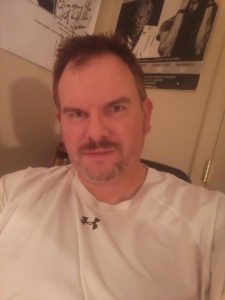
One of my clients shares his testimonial about his experience at Be the Change Nutrition after recently reaching our one year anniversary of working together!

In Mike’s words:

Corinne’s Be the Change Nutrition is saving my life and I am going to tell you about it.

I have been overweight most of my life, with surges of activity and better eating, but only to fall back into lethargy and bad habits. Corinne’s dedication, patience and insights are exactly what I needed to start – and continue – losing pounds after all these years.

It was “fun enough” to be a big, fun guy for all these years, but in reality, the tears of a clown are what were hiding behind the chuckles. Overweight people will know that being fat means ‘selling yourself short’ and ‘accommodating others’ over looking out for yourself.  There is a real psychological element to being overweight and these issues can not be fully tackled by just- the familiar but limiting “eat less, exercise more” simplicity, or a stack of diet books or some type of “I’ll go to the gym everyday until I’m in shape” mentality.  One must really have the help of a trained, and compassionate, licensed nutritionist like Corinne Goff to really break through these obstacles of a self-sabotaging mindset and the negative behaviors associated with being obese.

Corinne knows what she is talking about. Upon meeting her, you will discover that she has a very healthy physique and happiness to her face that most of us would envy.

More so than “what to eat and what not to eat,”  Corinne helped me discover the ‘whys and hows’ of my overeating. Case in point: I never realized just how much bread, carbohydrates, sugars and sweets I had been eating until Corinne had me document my food intake with a journal. Only then, could we really see together the mistakes I was making. Yes, I will use the word ‘mistakes’ because, to cut to the chase, to eat like I had been my whole life was a detrimental mistake, not only to my looks, but to my health, my career as an Actor, and my enjoyment of life.

I will never get back the years I spent being overweight, all I can do now is move forward, and I advise anyone reading this to remember that every day you put off getting help is another day of misery. Or even worse, mediocrity. Because when you are miserable, at least you feel it. When you are just mediocre, you don’t feel anything.

This is your wake up call. If you are fat, pleasantly plump, ‘large and in charge’, a BBW, ‘not fat just husky’, Big & Tall, portly, jolly,  or whatever you and your friends like to think of yourself as… that is mediocre. That is not living up to your best potential. You are hiding behind the fat. You are hiding behind fear.

Kill the excuses. The fact that many, if not most, of us  Americans are overweight is not a good excuse. The fact that your family, or your friends, or your spouse or even your kids are overweight are not good enough reasons to not apply yourself now to losing weight.

If you are struggling, then you know you care. Call Corinne. She will work with you, to make things happen for you. You can do it and Corinne and her Be the Change Nutrition can help!

Corinne Goff’s  Be The Change Nutrition consultation helped me lose 35 pounds in twelve months. Every pound has been a challenge and Corinne has been with me the whole time.  I started in September 2015 at 302, then reached my goal of 289 by Jan 1, 2016. Just getting to 289, even if I had to take my shoes off!,  and making that simple first goal was great.  We have set monthly goals since, most I have met, some I have not.  But we keep pushing forward, meeting every single week. I weighed in at 267.6 at my last weigh in with Corinne in early September, 2016. The next goal is 259 by January 1, 2017. I may get there sooner. For 2018, I will focus on my life-goal weight. But, one step at a time, and I am slightly ahead of schedule. That’s the nuts and bolts.

Beyond pounds, for me the real deal is how I look and how I feel. I don’t have that same “tired” feeling all the time, or that usual “bloated after eating” feeling… that feeling I had all day, no matter what or when I ate. I don’t have that ache in my lower back anymore. Well, there’s 35 pounds less to carry! Also, for the first time in years, I got in the “30s” for pants size. From 42 down to 38. And, for the first time since college, I am into a size 2XL shirt, instead of a 3XL or even a 4XL.

It’s great to be “a big guy.” I’ll always be a big guy. But to be a big guy in a 2XL instead of a 3XL… that is the change that I want to be. And now, that is the change that I am!

If you are overweight and/or unhealthy, and have read this enough to feel a glimmer of inspiration to call Corinne, I urge you to call her now, before thinking too much about it, or “discussing it with my spouse” or “sending her an email when I get home from work.” We all know those are the delays that we put in front of us to avoid taking action.

You aren’t going to figure this out on your own, and you won’t be able to “wait until next year” or “when my schedule clears” or to “get back to this later because now is just not the time” to lose weight. These are the lies we tell ourselves.

Start telling yourself the truth. You need to lose weight. Call Corinne now and get started. – Mike

verdi

Before working with Corinne and Be the Change Nutrition (May 2015).


image

One year into working with Corinne and Be the Change Nutrition (Sept 2016).


Thanks so much for sharing Mike!

What do I believe helped make Mike’s nutrition counseling experience such a success?

Definitely his positive attitude!

No matter what type of week he’s had, he keeps his focus on his long-term goals and the behavior changes he needs to keep working towards.  He does not let any setbacks get him down.  He knows and accepts that making changes is challenging and never gives up.

When you know what is important to you– you find a way to make it happen.

There is nothing I want more than to see my clients get where they want to go with their nutrition/health goals.  Mike is an excellent example of what you can achieve with persistence, patience and a positive attitude.  I look forward to continuing to work with him through his weight loss and wellness journey.


Note:  I take client confidentiality very seriously.  Your personal information and what is discussed at our meetings is never shared.  Mike graciously volunteered his story for my website.

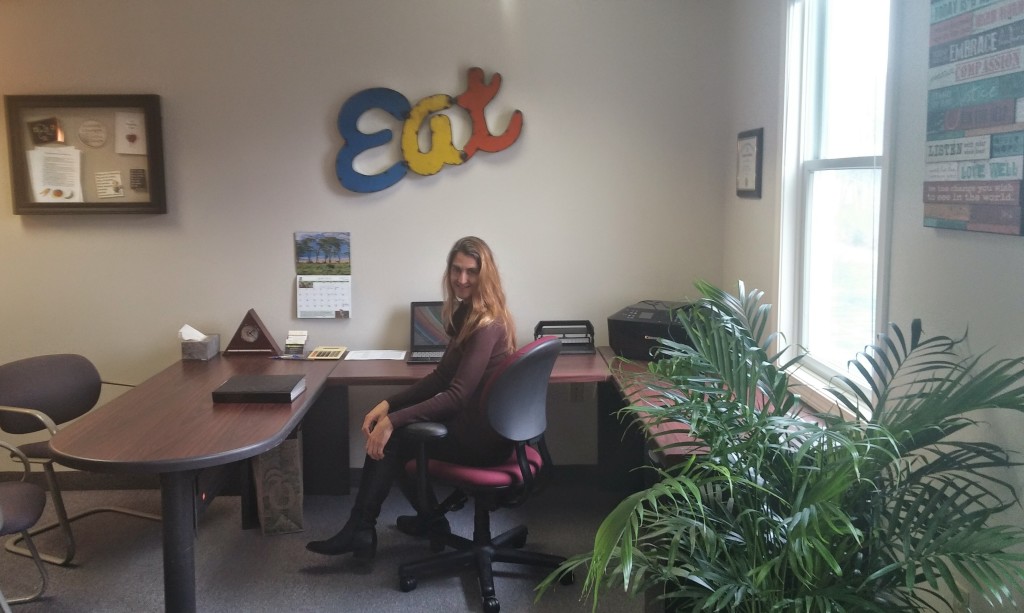
Be the Change Nutrition has moved…. not far, just 2 doors down.  🙂

Same building (D) in The Meadows, new room:  302.

You know, I really loved my old office and was kind of sad when I first found out I had to relocate.  I was comfortable, cozy and familiar with my space.  So, it felt a little stressful to leave behind what I knew and go to something different from what I was used to.

Change is hard, whether it’s moving offices or trying to create healthier eating habits.  There is uncertainty and fear– but change is essential for growth– and trusting that life will unfold as it should and having a positive outlook are musts!  Sometimes change is just the thing you need.  My new office is bigger, brighter and I’m so happy with my change!

desk side view

I am thrilled to be working with my current clients as well as anyone new who is struggling with their eating habits.  Whether you aren’t sure what to eat or whether you are dealing with unwanted eating behaviors like overeating, you don’t have to try to work through it alone.   You are unique and my job is to help you learn what is holding you back from being your best self and find a solution that will work for you.  

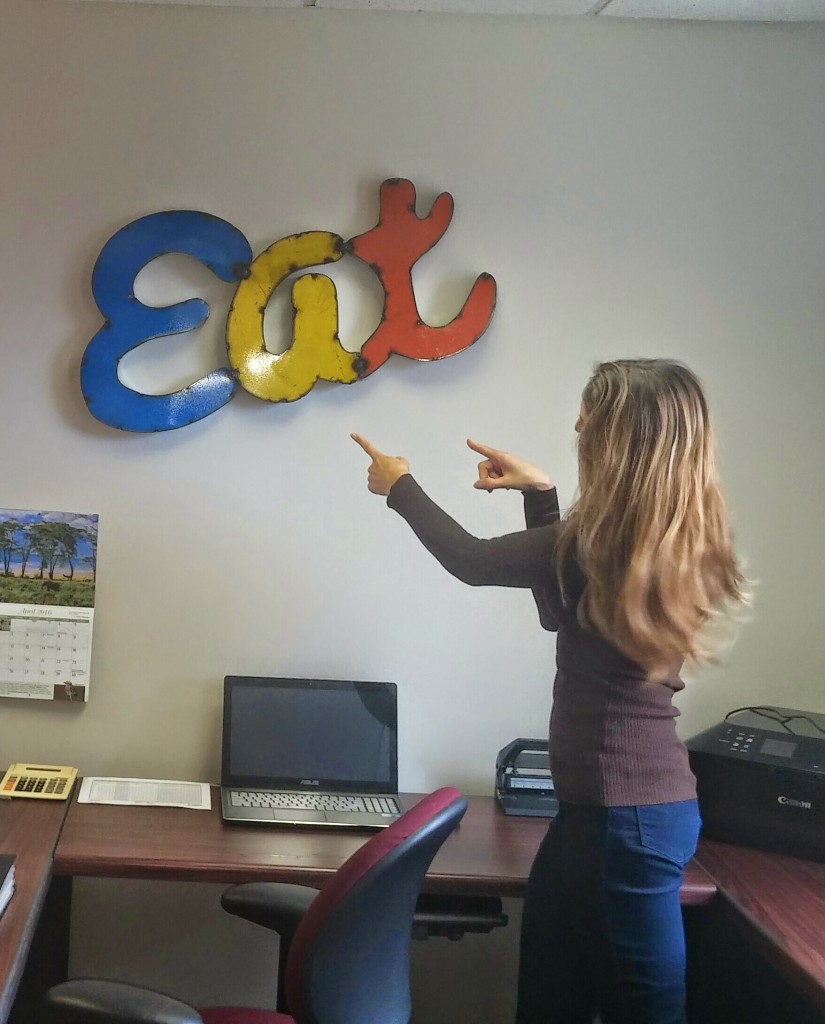
I am a firm believer in eating!
Eating good quality food, nourishing food–  and also enjoying the foods you love.  I also know that you have to learn to accept yourself for who you are right now, even if you don’t live in the body you dream of having.  Love and embrace yourself first and your eating habits will follow suit.  Hate on yourself and punish yourself with dieting and you’ll never find peace.  I’ve been there; it’s not a fun way to live.

Forget the diet foods… Eat like your life depends on it– because it does!

point eat