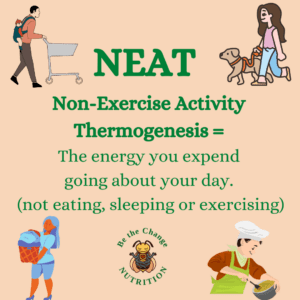
People expending energy going about their day.

Have you got your diet, exercise, hydration, sleep and stress management dialed in…

but you’re still struggling to lose weight?

 Take a close look at how you spend the rest of your hours.

What we eat and what we do for exercise are often the focus when trying to lose weight– and yes, they are biggies! But one often overlooked factor is NEAT (non-exercise activity thermogenesis).

Here is how our daily total energy expenditure (how we burn calories) breaks down:
💥BMR (basal metabolic rate) ~60%
💥TEF (thermic effect of food= digestion and absorption of food) ~8-15%
💥EAT (exercise-related activity thermogenesis) which can be as much as 15-30% for habitual exercisers or as low as 1-2% for minimal exercisers. Most people fall into the lower percentage.
💥NEAT (non-exercise activity thermogenesis) which is highly variable as well, however it accounts for MORE energy expenditure than EAT when measured over the course of the day.

NEAT can have a significant effect on body weight. 😲

Doing some structured exercise and then being sedentary for the rest of the day could be related to why your weight won’t budge.

Yes, we all need to rest and relax! 📖
Reading a book or just chilling can be a very good thing! 🥰

But take an honest look at how much you sit during your day.

Is your job sedentary or are you on your feet and moving often?
How much leisure time do you spend on the computer or watching tv vs playing with you pets, doing yard work or cleaning your house?

All the seemingly insignificant things you do during your day add up.

Think about all the NEAT ways you can add more movement into your day! 😃🚶‍♀️
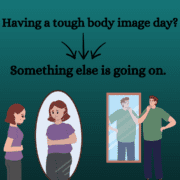
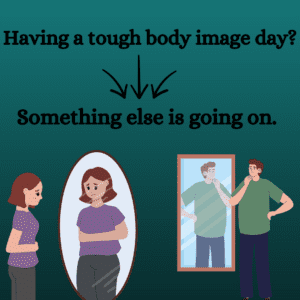
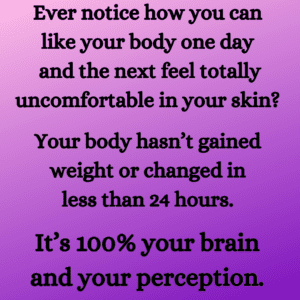
Your body image is the way you PERCEIVE your body (not how your body actually looks).

While your body may not change much day-to-day, your experience of your body can change drastically. 

ALL body types/shapes/sizes/weights struggle with this. 

Get curious about why your feelings towards it may change depending on your current circumstances, thoughts, beliefs, emotions, mood, attitude, etc. 

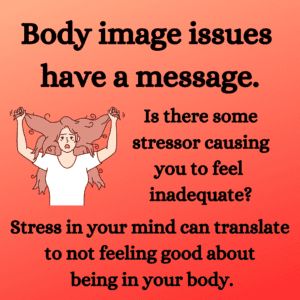
Is something going on that is manifesting as the belief that your body isn’t good enough?

A negative body image can act as a symbolic substitute for something deeper. Your focus goes on the body as a distraction. For example, feeling insecure can translate into ‘I feel so fat’. Or feeling depressed can show up as ‘I hate my stomach’. When you’re feeling more self-confident, negative body image can shift to feeling more positive or accepting of your body.

Your perception of how you look can change depending on how you are feeling emotionally. 

Distinguish between having negative body image thoughts and identifying with them as your core self. You aren’t your thoughts.  When you can notice that you are having these thoughts– and that you are not the thoughts- this can create a sense of separation from them. 

When you can unhook from your thoughts, you have more control over changing them.

Repeat negative thoughts and they will become stronger. Practice kinder, accepting thought and they will become stronger. Think of it like going to the gym to build muscle. It takes consistency, repetition and time.

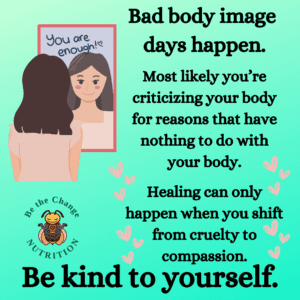
Woman looking in mirror. Understanding bad body image days happen and to be kind to yourself.

A healthy body image is a journey. Healing can only happen when you replace cruelty with compassion. 💞

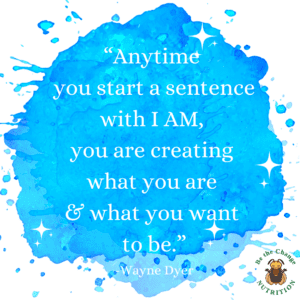
Anytime you start a sentence with I AM, motivational quote by Wayne Dyer.

What are you saying to yourself about yourself?

“I AM _____________”

Whether we think it or say it…

“I AM” influences how we feel and behave.

What we tell ourselves about ourselves affects how we FEEL.

And the way we FEEL drives our ACTIONS.

Thought ➡️ Feeling ➡️ Behavior.

Tell yourself “I am lazy” or “I am not going to be able to do this” and guess how you’re going to act? 😟

Instead, say to yourself how you want your life to be using “I AM.”

😜 It may sound goofy, but if you’re skeptical, just try it!

Examples of positive I am statements:

😎 I am going to have a good day
🙏🏻 I am grateful
🌈 I am beautiful
🧠 I am smart
🏃🏻‍♂️ I am capable
🦁 I am brave
🥰 I am compassionate
💓 I am kind
😄 I am excited to be here
💪🏻 I am strong

(see more examples here)

I am going to accomplish my nutrition goals today! 😀

Make it about who you want to be, not who you don’t want to be.

Whether we think it or say it…
“I AM” influences how we feel and behave.

Bowl of popcorn.

Food addiction is a highly controversial topic.

Can you really be addicted to a specific food??
🤔🍰🍪🍫

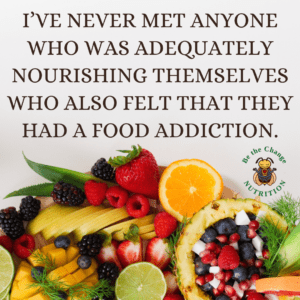
🥨 Yes, food can FEEL addictive for many people.

It’s easy to believe food can be addictive because it actually can activate our ‘feel-good’ brain receptors…

🎵🐶🚲🌞 But so can many other pleasant things in life like:

Music, massage, exercise, being out in the sunlight and fresh air, looking at your dog or planning a fun weekend.

🤗 Food is actually supposed to make us feel good!

So why can it feel like an addiction?

➡️ Restriction and/or not allowing yourself to get pleasure from food. (aka Dieting!) 😵‍💫

Inadequate intake of carbohydrates, protein or fats can leave you with seriously intense food cravings.

Addictive behaviors like binges occur as a result of deprivation.

How to overcome these feelings of addiction?

🍴 Stay nourished. This means ensuring you are eating ADEQUATE calories, a VARIETY of calories and a BALANCE of calories. Have a registered dietitian review your diet. You may need to establish a new routine of eating and/or change the types of foods you’re eating.

🫤 Stop telling yourself you’re an addict. You’re only reinforcing your behavior when you take on a victim mentality. Instead, get curious. See yourself as someone who is learning how to eat in a healthier way. Look for the message and opportunity for change that’s behind your unwanted eating habits.

😍 Normalize instead of moralize. Normalize the food you feel addicted to. Fit that food right into your day of balanced eating. See that food as neutral and not ‘bad’. Allow it! Give yourself permission to get enjoyment from it. It may mean incorporating those chips into a balanced lunch or having that cookie as dessert after a balanced dinner. Work towards seeing the addictive food as just another food choice in your diet.

You CAN learn how to eat and enjoy the foods you feel addicted to in a way that you feel good about! 💞

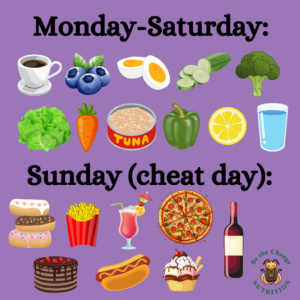
Weekday foods and cheat day foods.

🚩 Needing a cheat day is a red flag that your diet isn’t working for you.

Otherwise, you wouldn’t feel the need to cheat on it. 🤯

When you’re satisfied with what you’re eating day-to-day, you’re much less likely to feel the need to overindulge. 😊


The big problem with cheat days:

They perpetuate a binge/restrict cycle & not a healthy relationship with food & eating.

‘Cheat’ implies you’re doing something bad or wrong. 

You’re not cheating on anything.  You’re just EATING.

Monday- Saturday:
🥗🍋🥦🍎🥚🍓🥒🫑🥬🥕🍵

Sunday (cheat day):
🍕🍔🍟🌭🍩🍰🍦🧁🍭🍺🍷🍹


🍩 If you’re really craving a donut, eat one– Don’t wait for a cheat day and eat six. And then a whole pizza. 🍕 And then a pint of ice cream. 🍨 All because it’s your one day to eat whatever you want since you’re going to go back to restricting tomorrow. 😕

Tips:

💖 Switch from an all-or-nothing mindset to one of balance. I personally love the 80/20 rule. 80% of the time choose wholesome, nutrient-dense foods and 20% of the time allow yourself to enjoy other foods. Or maybe you feel more comfortable with 90/10 or 70/30. Do what feels right to YOU to support your physical and mental health.

💖 Drop the good/bad food mentality. Food has no moral value. You’re not a good person for eating “good” food and you’re not a bad person for eating “bad” food. See all foods as deserving a place in your diet if you enjoy them. Foods differ in their nutritional value, but it’s what your diet looks like as a whole that matters. Variety is a healthy thing for getting the wide range of nutrients you need plus the pleasure and satisfaction you crave.

💖 Build trust with your body and around food. It makes sense that you feel no control and want to binge on foods you restrict. The way to break this is to begin to allow them back into you diet. Knowing that you can have that chocolate again tomorrow or another time takes away the urgency to eat it all right now. Once you realize that you can have anything you want, those foods lose their allure and power.

💖 Figure out the reasons why your current diet feels limiting. Why do you feel you need a cheat day? Where can you fit in any favorite foods you’re avoiding?

Honor your cravings.

Enjoy food mindfully and with self-awareness.

And without guilt or shame.

Notice what feels good to your body and what doesn’t.

Give yourself permission to incorporate those cheat day foods sensibly into your diet!

If this sounds scary, but you want to get there… I can help you.

All👏🏻foods👏🏻can👏🏻fit!!

We all overeat sometimes.
And it’s OK! 👍🏼

BUT… If it’s happening over and over and you want to stop…

Then it only makes sense to look at ✨WHY✨ you’re overeating so you can make a change.

There are many reasons for overeating, but here are 5 that are biggies:

1. SKIPPING MEALS OR UNDEREATING AT MEALS. 🍎
Under-fueling/inadequate calorie intake will catch up with you, often resulting in overeating later. Plan ahead so you don’t miss meals and ensure you’re eating enough to satisfy you.

2. IMBALANCE OF MACROS AT MEALS. 🥗
Macros (=macronutrients) are carbs/protein/fat.
No, you don’t need to count them, but if you’re lacking any one of them, you may find yourself overcompensating later. Strive for balance and variety.

3. YOU’RE TIRED. 🥱
When you’re sleep deprived, food can be seen as a quick energy source. It’s easy to overeat when what you really need is to rest.

4. WAITING TOO LONG TO EAT BETWEEN MEALS. 🕒
Not everyone needs a snack between meals, but if you’re ravenous when it comes time for lunch or dinner and end up overeating, you might find having a snack in between helps.

5. EATING WHILE DISTRACTED. (phone, TV, etc) 📺
 If your overeating correlates with scrolling on your phone, playing on your computer or watching a show, then try putting the screens away and paying more attention to your food when you eat.


🫢 Surprised that I didn’t mention lack of willpower?
Overeating typically has nothing to do with willpower.
Telling yourself you have no control is disempowering.
Get curious about other potential reasons and make changes!

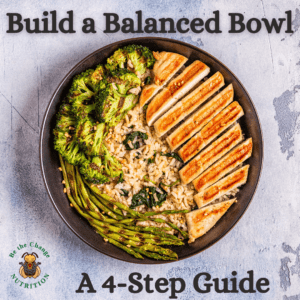
Balanced bowl of food containing protein, vegetables and carbohydrates.

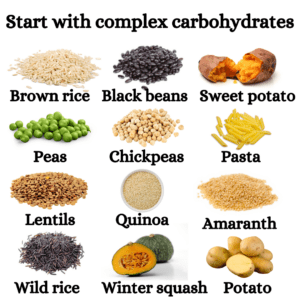
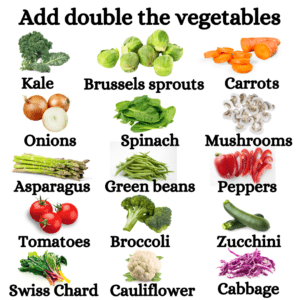
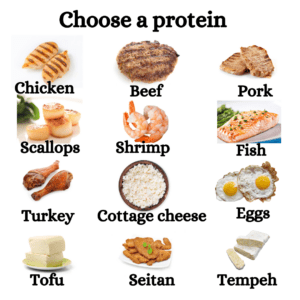
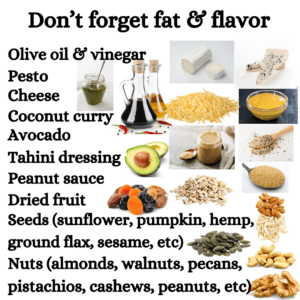
✨Create a delicious, balanced bowl in 4 easy steps.✨

These balanced bowls give you an ideal combo of carbs, protein, fat and fiber to stay full.

They’re a perfect way to get a wide range of micronutrients (vitamins & minerals).

Memorize this template and you’ll be able to put together dozens of different meals!

Pick one carbohydrate source or combine 2 or more.

Rice + beans pair well as do quinoa + winter squash.

Aim for a variety of veggies over the course of the week.

Steam, oven-roast, grill or saute them.

Frozen are fine too- microwave or steam & they’re ready in just minutes.

If you’re looking for a vegan meal, choose one from the bottom 3 and keep in mind that many of the carbohydrate sources like lentils, beans, quinoa and some pastas are actually pretty decent sources of protein… so mixing and matching these can meet your protein needs.

Flavorful sauces & crunchy, salty, sweet and spicy toppings will boost the nutritional value as well as keep your food interesting.

🍠🥦🍗🥑🍚🥬🍄🧄🍤🥜

There you have it:  Pick a carbohydrate, protein, veggies and fat/flavor!

✨Get creative and discover the combos you find the most satisfying.✨

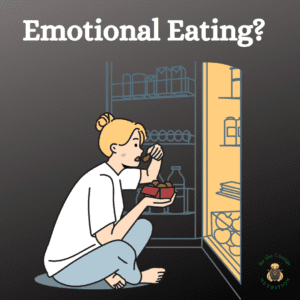
Woman emotional eating in front of the fridge. 

Emotional eating is not bad or wrong! 🤗 It’s normal and OK.

Your body is sending you a message that something is going on.

It’s OK to have this as an option.

🚩 But there can be negative consequences if food is your one and only way to respond to your emotions.

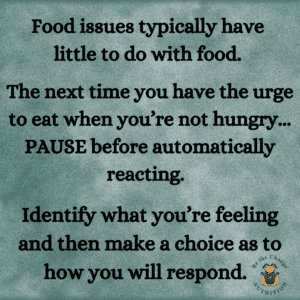
Reasons for emotional eating. It's ok to do but you need other options.

➡️ If you want to break “emotional eating” you need to practice the PAUSE.

This pause between the stimulus (emotion) and response (eating) is where you’ll find your freedom to choose:

1. Notice what you are feeling. Identify it. Feel it. 😟

2. Take a few deep breaths and PAUSE. ⏸️

3. Think about what you need right now and CHOOSE your response. 🤔

❣️ Maybe you choose to just feel whatever you’re feeling, knowing that it will pass.

❣️ Maybe you choose to turn to food. Here’s how: Be intentional about what you want to eat. Put an amount that you feel will satisfy you on a plate or in a bowl, sit down with it and slowly enjoy it, allowing it to soothe you. This is completely the opposite of mindlessly grabbing a bag or box of whatever and zoning out in front of the TV. Instead, it becomes a conscious choice.

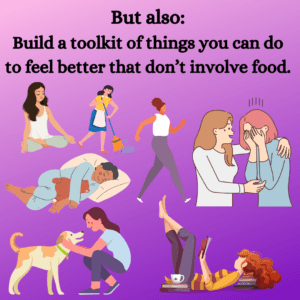
Alternatives to emotional eating.

❣️Maybe you decide that food isn’t going to help you feel better so you choose an alternative response. This is where knowing what you like to do and having a list of options comes in handy.


🌟 A lot of people identify as “emotional eaters” when in fact, they haven’t eaten enough or the right types of foods earlier in the day. So, when stress arises and the urge to eat hits, it’s easy to believe that it’s because of the emotion…. When it’s really got more to do with undernourishment.

💗 At Be the Change Nutrition, I help you untangle your unwanted eating behaviors and come up with a strategy to change them and get you feeling back in control of food again. 💗


Girl reading book called Just Eat It.

                                                          Just Eat It. 🍩

I love reading about the science of how food affects our bodies AND anything having to do with the psychological aspects of eating.

  The two are definitely intertwined.

Having an understanding of each is crucial to being a dietitian in private practice working with people looking to manage everything from diabetes to digestive distress to disordered eating.  This book perfectly combines food science with intuitive eating and it’s absolutely packed with tons of important information and practical tips.

👍🏻👍🏻 Two thumbs up for Just Eat It by Laura Thomas, PhD.

I highly recommend this book for anyone who wants to get off the dieting roller coaster, stop obsessing over food and figure out how to just eat normally again.  If you struggle with a poor body image or orthorexia (an unhealthy preoccupation with healthy eating) this is a must read.

Just Eat It explains how the messages we’re exposed to about food and our bodies can cause disordered eating habits and a negative body image.  There are reasons why our relationship with food is so unhealthy and why so many people hate their bodies and stress over everything they’re eating.  It’s basically been taught to us.

It’s something we’ve learned and now it’s something we have to unlearn.

Quote: The biggest lie of diet culture is that you will be happy when you reach this elusive body standard.

You will not find any meal plans or diet dos & don’ts in this book. 😮‍💨

Just Eat It emphasizes the importance of self-compassion and mindfulness– Along with how to work at these things to help you go from disordered eating to intuitive eating and feeling good about yourself.

You’ll read about giving yourself permission to eat (and addressing all the fears that come with that).  You’ll learn the steps to take to help you trust your body to guide you towards what, when and how much to eat.

She explains how by taking foods off a pedestal they lose a lot of their allure.  When you stop restricting them, they actually become less exciting and tempting.  A few more valuable things you’ll learn are:  The biology of how fullness & satiety work, how to tune in to your body cues & feel your fullness, how to pay attention to the way different foods make you feel, how hunger hormones work and how to differentiate between emotional & physical hunger. You’ll find out how to deal with your (irrational) inner food critic and rewire your brain. She also debunks several nutrition myths that may be preventing you from properly nourishing yourself.

I loved this book so much because it aligns with a lot of what I work on with my clients at Be the Change Nutrition.  Yes, we talk about food, but creating a healthy relationship with food & your body involves so much more and that’s what you’ll find in this book.

Quote: What could we achieve if we weren't obsessing about our bodies?

If you’re not living your happiest, healthiest life because of your food and body issues…

🍩Just Read It! 🍩