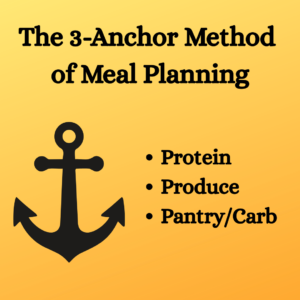
The 3-Anchor Method of Meal Planning
Why Traditional Meal Planning Fails Most People
Most people don’t hate meal planning.
They hate the version of meal planning they’ve been taught.
The one that assumes:
- You have predictable energy every day
- You enjoy cooking
- You know exactly what you’ll want to eat on Thursday
- You won’t get derailed by work, kids, weather, or a rogue craving
Rigid systems break the moment life gets messy.
Flexible systems bend with you.
The 3‑Anchor Method: Meal Planning for Real Humans
Instead of planning every meal, you plan three anchors for the week:
1. A Protein Anchor
Choose 1–2 proteins you can repurpose in multiple ways.
Examples:
- Rotisserie chicken
- Ground turkey
- Tofu or tempeh
- Salmon fillets
- Lentils
These become the backbone of your meals — not the whole plan.
2. A Produce Anchor
Pick 2–3 fruits or veggies you actually enjoy and will realistically use.
Examples:
- Pre‑chopped veggies
- Salad kits
- Frozen broccoli or green beans
- Berries or apples
- Premade mixed fruit bowl
This keeps meals nutrient‑dense without requiring a chopping marathon.
3. A Pantry/Carb Anchor
Choose 1–2 easy carbs that cook quickly and pair with anything.
Examples:
- Rice packets
- Pasta
- Tortillas
- Potatoes/Sweet potatoes
- Quinoa
- Whole grain crackers
You’ll use these as your meal anchors and build balance around them with other foods you have in your house.
Now you have mix‑and‑match building blocks — not a rigid script.
How It Works in Real Life
Let’s say your anchors are:
- Protein: Rotisserie chicken
- Produce: Salad kit + frozen broccoli
- Carb: Rice packets + whole grain crackers
You can turn that into:
- Chicken burrito bowls
- Chicken Caesar salad with crackers
- Chicken + broccoli stir‑fry
- Chicken salad snack plate
- Chicken + rice soup
Five meals. Zero stress. No Sunday prep required.
The 10‑Minute Meal Rotation
In addition to your 3-Anchor meals, include some low-effort options in your weekly plan.
Here’s where the magic happens:
Create a list of 5–7 meals you can make in 10 minutes or less.
These become your “I’m tired, I’m hungry and I refuse to cook” safety net.
Examples:
- Eggs + toast + orange slices
- Pasta + jarred sauce + frozen mixed veggies
- Greek yogurt bowl + nuts + berries
- Chicken quesadilla + spinach
- Veggie omelet + pre-cut fruit
- Tuna salad wrap + baby carrots or cucumber
- Microwave baked potato + cottage cheese + salsa
This rotation prevents the 5 pm “I guess I’ll just order pizza again” spiral.
Why This Works (Physiology + Psychology)
This approach supports:
- Blood sugar stability (consistent meals, balanced plates)
- Stress reduction (fewer decisions = calmer nervous system)
- Better nutrition (you’re set up for success even on chaotic days)
- Less burnout (no rigid rules to rebel against)
It’s structure without suffocation — the sweet spot for most people.
The Template (Mentally or Literally)
Use this each week:
This week’s anchors:
- Protein(s): ________________
- Produce: _________________
- Carb(s): __________________
10‑minute meals:
- ______________________________________________
- ______________________________________________
- ______________________________________________
- ______________________________________________
- ______________________________________________
Grocery list:
- Anchors
- Snacks
- Breakfast items
- “Emergency” meals
Simple. Flexible. Human.
The Bottom Line
Meal planning doesn’t need to be a big production.
It doesn’t have to be a Sunday ritual.
It doesn’t have to be perfect.
It just has to make your life easier.
And when you build a system around anchors, flexibility and quick meals, you get all the benefits of meal planning — without the overwhelm, the rigidity or the Tupperware trauma.

Love this simple, flexible approach to making meal planning feel more manageable!
Thank you Kelly!