Weight loss is a great goal. People come to see me for all kinds of reasons, and almost always, weight loss is either the main reason or part of it. But sadly, I see too many people who are not living their best life because they are held back by their body image issues.

You could have 5lbs you want to lose or 50lbs. It doesn’t matter– when you feel uncomfortable in your skin it makes you frustrated and miserable. I get it; you want to change your body to feel better. And yes, there are dietary and lifestyle adjustments you can make that can help you do that. Those are the kinds of changes you’ll be working on here for sure. But aside from food and movement, there is another dimension to your weight loss journey that is equally as important: your mindset surrounding it.

Ask yourself WHY you want to lose weight. How would your life be different? There is always something deeper there, something you want from the weight loss that is not the actual weight loss itself. When somebody tells me they want to lose weight, what I really hear is some version of “I want to feel better about myself and in my body.”

You want to feel better about yourself and your body. Think about that concept— do you actually need to wait until you physically change your body to feel that way? Your initial response might be YES! But, truly the answer is no. To prove my point, there are plenty of unhappy thin people who see their bodies as fat and flawed, just as there are many people in larger bodies who feel energetic, confident and perfectly happy in their skin. It’s really a mindset thing more than a body shape thing.

Wait, I’m not saying to just give up on your weight loss goals! I’m saying, put the number on the scale aside for now and set your sights on other ways to measure your progress and success. Like maybe the things you are hoping for after the weight loss? Things like feeling more confident in your body, experiencing the freedom to do the things that make you happy and being more accepting of how you look. So while you are busy putting your nutrition changes into effect and waiting for the weight loss to happen, envision who you feel you will be once you lose weight and then… BE that change. Yes, I’m saying to have these things now.

This is what Be the Change Nutrition is about. It’s about you BEING the person you want to be. With every cell in your body, practice feeling, thinking, behaving and living your life like that person. Act like that person. Believe you are that person. Not once you lose weight, but right now. Another way to put it is “act as if” or “fake it til you make it.” It’s the law of attraction– you’re more likely to be successful with your weight loss goals if you think, feel and live like you have already reached them!

To give a few examples of how to feel better about yourself and in your body you could:

  • Stop comparing your body to other bodies. I’m guessing you’re zoning in on a select few, like celebrities, models or Instagram pics that aren’t even real. Or maybe it’s that one person at yoga class. Instead, take a broader look around at people: at the grocery store, at the park, your family and friends, etc and notice all the different body types and the unique beauty that every person has. Comparing is not helpful and it will only make you feel bad.
  • Wear clothes that fit, that are comfortable and that you like. Ever notice how you can put on a favorite outfit and feel like a new person? Or wear something too tight, baggy or uncomfortable and all you can think about is how icky you feel? Buy and wear clothes that you like and that fit the body you have now. Maybe treat yourself to a pair of new shoes/sneakers/boots, a fun necklace, a pretty lipstick, etc– whatever gives you a little boost.
  • Let go of your food rules. No foods are off-limits. It’s when you ban certain foods or deny your hunger that you lose control. Allow all foods and then choose when and if you really want them. Relaxing your food rules lets you create a healthier relationship with your body’s cues and builds trust in yourself. It changes your mindset from “I can’t have that” to “I don’t want that” and food loses power over you.
  • Eat for the way you want to feel. Keeping this goal in mind will help guide your food choices. Pay attention to what types of foods satiate you and digest well. Learn which foods don’t. Listen to your body. Notice if you eat to change an unwanted emotional state like boredom, sadness, loneliness, anxiety, etc. In most cases, food doesn’t make you feel better– it only briefly numbs you out. Instead of mindlessly eating, take a pause to check in with yourself and ask what you really need to do to feel better.
  • Have an attitude of gratitude. Thank your body for all it can do. Do you have eyesight? Hearing? Legs to move you around? Good health? You might not always have the things you may take for granted. Appreciate and accept the body you live in. When you cultivate gratitude, you get a warm and fuzzy feeling inside and you are also more likely to take better care of yourself. Be thankful for all the food you have– it’s hard to believe when most of us live in a world of excess, but there are people who don’t have enough to eat.
  • Do something every day that makes you feel good in your body. When do you feel best? For a lot of people this is when they are doing some sort of movement: walking, running, yoga, dancing, lifting weights just to name a few. Being IN your body through motion, stretching and even meditation/breathing can be one of the most effective practices you can do to feel more confident and comfortable in your skin. Being out in nature is also very healing.
  • Have a food plan. Taking the time to plan and prepare your meals means you’re not constantly stressed about what to eat. There is comfort in knowing what you are going to eat at your meals and snacks each day– the decision is already made and you’re not scrambling to figure out what to do when you get hungry. Have a few go-to quick and easy meal ideas on hand for those days when planning and prepping doesn’t happen. Keep a grocery list and shop regularly for what you need.
  • Stay patient and persistent. If your body has weight to lose, it will happen because you are caring for it and being kind towards yourself, not because you are trying to change it.

Hopefully you get the idea. These things have nothing to do with your body size or weight and they have everything to do with what goes on inside your brain and the behaviors you choose. It’s up to you to create your own reality and that starts with your mindset. You will need to leave your comfort zone. But through practice and repetition, you’ll find that your new ways transition into your new comfort zone. Once you start being the change that you want to see, you’ll realize that your life IS changing and you don’t need to wait to achieve these things in the future. You can have them right now. It’s always your life, your body and your choice. 

If you want to change, then Be the Change 🙂

0407151646~2

Do you spend enough time in nature?

I find it ironic that I can go for an hour walk in the woods and not come across a human soul, but I can drive by a Dunkin Donuts and see a line of cars wrapped around the building.

Sometimes on a gorgeous weekend day we will drive south and stop at random parks and beaches to walk and be outside.  Usually we don’t see too many other like-minded explorers.  But head to a mall or most any store and voilà– masses of humans.

It never ceases to blow my mind.   It’s pretty nice to have these nature walks to myself but it’s also kind of sad.

It seems that almost everyone I meet is overwhelmed with work/home/family responsibilities to the point where feeling stressed-out dominates feelings of peace and happiness.

Instinctively I think we all know it isn’t healthy to live that way.

If you are feeling too much stress, what can you do about it?  It doesn’t have to take a lot of time or money.  It can be as simple as taking a walk in the woods and I strongly recommend you give it a shot.  Let me introduce you to Forest Bathing:

Forest Bathing is otherwise known as Shinrin-yoku in Japanese.  It  means walking through the woods opening up all of your senses.

Shinrin-yoku is regularly practiced in Japan as therapy for relaxation and stress management.  There’s actually been research on this showing that it can lower levels of cortisol (stress hormones), reduce blood pressure and boost the immune system.   Getting out in the woods and away from screens and sitting (and yes, a break from people too) can do wonders for your well-being and outlook on life. It can center and ground you.  Change your perspective when everything feels too crazy.  Calm you.  Clear your head.  Ignite ideas.  Reconnect with nature.  After all, we are a part of nature although modern society often makes us forget this.

Sometimes I walk in the woods to think, sometimes I go to not think, and often I end up doing a combination of the two.

Stop for a moment and consider how quickly the days and years go by.  This is your life.  Your one life here on Earth.  As an old teacher of mine used to always say:  Life is not a dress rehearsal!

Are you living the way you want to be living?  What really matters to you and what is important?  And why aren’t these things a more significant part of how you live?

How you handle stress has a huge effect on your health.  You can eat a perfect diet (whatever that is) but lead a stressful life and your health will suffer.  Chronic stress leads to inflammation in the body and is associated with diabetes, heart disease, hypertension and obesity just to name a few health issues.  Health is so much more than just eating well and exercising.  Are you taking care of yourself from all angles?

You don’t have to walk through a forest to get the benefits of being in nature.  Walking on the beach or (my favorite) the Cliff Walk for example is just as therapeutic.  Even sitting on a swing in your yard on a sunny spring day,  hearing the birds, gazing at the trees and sky, breathing in fresh air and feeling the warmth on your skin can relieve stress. 

Make time for these things.  Engage your senses and be in the moment. 

Think about what you could change about your current lifestyle to fit in some daily relaxation and be in nature. 

Small changes can have a tremendous impact.

0407151644~2

I have a question I often ask my clients that I believe is worth taking some time to reflect on…

What about your life would be different if you lost the weight?

I see so many people who have focused for so long on their desire for weight loss and the struggles endured in that process that they have lost sight of what deeper result they are actually seeking.

Is it really a new body they want or rather how they would feel and what they would do in that new body?

All too often I meet people hurting badly inside because they don’t look a certain way that they *think* they should look.   They think their life won’t change until they finally lose weight.

Sure, losing weight can be a great goal.  Especially when it means you are elevating the quality of your food and nourishing your body instead of depriving it.  But there’s more to think about.

Look beyond simply being thinner and ask yourself,  then what?

What do you expect will change in your life once you DO reach your desired weight?

Answers to this generally sound something like:

I’ll be happier and more self-confident,  able to do more things, start a relationship, feel more comfortable in my body…

Hmm, is that truly how it works?  Having the body you *think* you want guarantees none of these things.

Do you know anyone personally who does have what you would consider an ideal body?  How does their life look?

Chances are they too struggle with finding joy, relationships, self-confidence, etc.

Here’s another question:  Have you ever lost the weight and been at what you consider your goal weight?

Was your life really any better?  If you were happy with how your life was at that weight, why didn’t you/couldn’t you stay there?

What I find really interesting is that many of the end results you are waiting for and putting your life on hold for

….are actually things you could be having right now.

They’re choices!  You can choose to be happy now.

You can choose to feel confident in yourself now.

You can choose to do more of the things you love to do now.

You can choose to feel better about yourself now

What if you replaced your stressful thoughts about your body and weight with self-nurturing, loving thoughts?

Why not begin doing the things that make you happy and feel good about being you?  Get a massage or a manicure.  Go to a yoga class.  Treat yourself to a quiet morning walk on the beach.  See a movie.  Savor a glass of wine while watching the sun set. Buy yourself a new outfit. You fill in the blank; it could be anything.

Whatever you’ve been not doing that you see yourself doing once you lose weight… go do now. 

However you envision yourself feeling once you lose weight, choose to feel that way today.


Happy 2020!

I want you to have a very Happy New Year and if you’re thinking it’s “diet” time or time to “get back on track,” then I beg you to forget about another diet and let me help you get where you want to go in a way that works….

I don’t need to tell most of you this:  Diets aren’t the answer.

Oh, some of you insist that they work– yet here you are, unhappy because you regained the weight plus some.  I don’t consider a diet plan a success if you temporarily lost weight on it but you couldn’t sustain it.

If a diet truly worked, you wouldn’t be back into your old eating habits.

A healthy relationship with food and eating isn’t going to be achieved through a diet– it’s going to be reached through you living your life doing the things that make you feel good enough to do them regularly.


Why diets don’t work:  A diet plan is an external set of food and eating rules.

If a diet feels like something you have to follow (which it does)– it’s guaranteed to not work for long.  We’re not designed to do well when we ignore our internal cues and wisdom to guide us in determining what to eat and when to eat.  And we definitely don’t thrive when we’re feeling hungry and deprived.

What if you could switch your strategy from dieting (external, rigid eating regulations) to self-trust and mindfulness (internal, natural signals)?

The idea is to make healthful changes that actually resonate with you and excite you rather than follow a diet invented by someone who knows no information about you.  When you make changes that make sense to you and when you understand how they are benefiting you, these changes are going to turn into life-long habits.  These habits will eventually become who you are.

Diets don’t come close to doing this.

Many years ago I was stuck in the diet mentality without a clue as to all the things I was doing wrong that were keeping me trapped in my personal hell.  At the time I had no idea that the foods I was eating, the foods I was not eating and the warped messages I was telling myself about food and my body were making me miserable and throwing my appetite and mood completely out of whack.

Hindsight being 20/20, I can see clearly now all the places I was going wrong then.  I remember feeling so alone and helpless with my struggles.  Because of where I was compared to the peace I know now with food and my body, I want to help free my clients from that trap.  I can help guide you into learning how to eat in a way that makes you feel good about food and your body again.

Trust me, with some patience and perseverance, it CAN be done!

Do you need help figuring out your new habit changes for the New Year?

That’s what I’m here for at Be the Change Nutrition.

It can be really hard to know what you need to change and where exactly in your day you could do things differently to get your eating back in balance.  Everyone is unique and specific dietary tweaks are customized to each person.

At Be the Change Nutrition I work with you to uncover what personal habits you have that aren’t serving you.

We delve into WHY you do what you are doing and HOW to change that.  This way you create positive, new habits that fit into your life and help you to be your best self.   Once you better understand what’s causing your unwanted eating issues, it’s much easier to start making lasting changes.

Happy 2020: NO DIETS PLEASE!

We are at the shortest day of the year– it’s dark, it’s cold and I am hearing so many of you say that you’re struggling to do the things you want to be doing to take care of yourself: Sleep, hydration, food choices, meal planning, cooking, relaxation time, getting out in nature, moving your body, etc…

Why is so hard to be motivated?? 🤷‍♀️

I find the topic of motivation fascinating.  Motivation, or lack thereof, comes up a lot in nutrition counseling sessions. 

“I know what I need to do but I can’t seem to find the motivation.” 

Does this sound like you?  You want to make healthy changes but you’re not feeling motivated to do anything about it and you’re stuck.

There’s an interesting twist to this dilemma and it involves altering your thought process rather than wishing you could drum up more motivation.

Motivation boils down to “the desire to do things.”  As in:  I’m super motivated to be healthier! 

Meaning:  I really want to do what it takes to be the healthy person I want to be– so the motivation is there but that’s where it typically ends. 

Having the motivation is only part of the story.   Is motivation really the issue when the wish to change is present, but the changes aren’t happening?  Your lack of making changes has little to do with motivation and this explains why you can’t seem to find it.

💡 I see a new approach to the sticky problem of motivation.   What if you stopped looking for it, asking others for it or waiting around for it to show its face?  It’s likely not going to happen that way.  Either you have it or you don’t.  It comes and it goes.   Motivation can be unpredictable like that.   You just can’t rely on it alone to catapult you into action. 

So, what can you do?  If you’re not able to make healthier food choices, eat more mindfully or get moving because of a perceived lack of motivation, then what is it that you need?

➡️The short answer:  Conscious Decision.

What if you shifted your line of thinking from this being an issue of motivation to an issue of needing to make a conscious decision? 🤔

First, find out if you really want what you think you want:  Here’s where you have to be honest with yourself.  Ask:  Is *insert desired change* something you are willing to work hard for?  If you’ve been trying and failing for years, then your approach is clearly not working. 

Acknowledge this and play around with the idea that perhaps you truly don’t want to make the changes you think you need to make and that is okay.  Sometimes realizing that you’ve been stressing about something that you actually need to let go of can be a huge relief.

Knowing what is important to you will be crucial for making this decision.  If you ponder the changes you want to make and decide that they definitely are what you want to do, you must make the decision to take the necessary actions.   You have to look at this as an intentional, conscious decision to do something and not with thoughts of “I’ll do it if I’m in the mood or feeling motivated.”  

If making a specific habit change is meaningful to you, reflect on why you are doing it and be prepared for your brain to try to interfere by creating excuses for not doing it.  You have to really be clear that it is something that you want to do.  If not, let if go for now.  Here is where you end the back and forth and go with your decision, whatever that may be.

🏃‍♀️ Running is a perfect example of my own struggle with this topic.  I have my days where I can procrastinate for hours waiting for the “motivation” to run.  My mind will be thinking:  “I don’t feel motivated!”  I have been known to clean my entire house top to bottom dressed in my running gear to delay going out the front door.  (I’ve debunked the theory that putting on your workout clothes invokes motivation for working out.)  Waiting for this thing called motivation to get me moving doesn’t work with running.  The motivation is there– I want to run– but it doesn’t happen when I rely solely on feeling the urge to do it. 

🌟 What works is consciously deciding to do it and then doing it. 

It’s about a decision rather than a debate.

Another thing is, you have to really know your WHY.  There’s got to be a darn good reason for doing the thing you are trying to accomplish.   This is where a clear understanding of the importance and meaning of taking the action comes in.  For my running, it’s because it makes me happy, boosts my self-confidence, makes me feel stronger and the whole physical and mental challenge of it is extremely empowering.  I like how it makes me feel so it’s something I want in my life right now.  But….it’s still hard.

I’ve been through this enough to know that once I take action, the motivation miraculously emerges!  😲

💫 Often the hardest things are the most worthwhile. 💫

I have learned that if I want to do something, really do something,  I need to stop the excuses and mind-chatter and decide on a clear-cut plan like:  “OK, I am putting on my sneakers at 10am and heading out around my neighborhood for 20 minutes.” 

For many people, writing it down in a day planner like an actual appointment works.  You wouldn’t just blow off a doctor appointment because you weren’t motivated to go, right? 

It may not always be easy, but once you look at it from this perspective, you can begin to better understand your behavior.

The next time you’re feeling in a slump and telling yourself you have no motivation, take a moment to make a conscious decision to do what you need to do. 

And then you owe it to yourself to do it. 

The unexpected outcome is– you’ll find the motivation and inspiration to keep up the good habit comes after you take the action. 

Stop waiting for motivation and decide to do it.  Repeat after me:  “I can do this!”

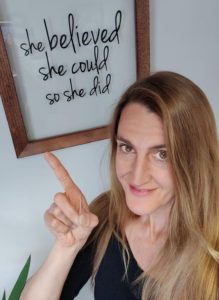
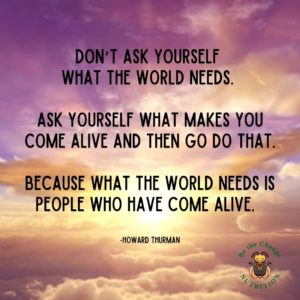
I love this quote.

I had it taped on the wall by my computer for the longest time because I found it so moving.  It serves as a reminder that we need to look inside ourselves to discover what excites us and brings us joy– and then make sure that we go and do those things!

Because everything is interconnected, when we do what makes us come alive, not only are we making ourselves better people, but we’re helping the world become a better place.

It is so incredibly inspiring when I meet someone possessing this kind of energy…

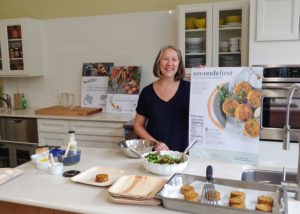
Betsy from Health Care without Harm and Erika from SecondsFirst invited members of RIAND (RI Academy of Nutrition and Dietetics) on a field trip last Thursday. Field trip– yahoo!

We had the opportunity to meet Erika, the founder of SecondsFirst, who is making her passion happen.  She is a woman who intensely cares about health, sustainable food consumption, reducing food waste, supporting local farming/fishing and helping those struggling with food insecurity.

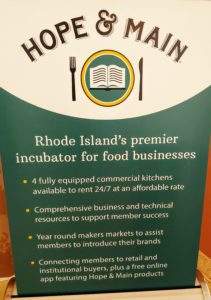
We met at Hope and Main in Warren where local food lovers and entrepreneurs can develop and expand their food business through the use of low-cost, shared-use commercial kitchens and other industry-specific resources.

There are over 50 small businesses working here creating products like: granola, toffee, cocktail mixers, butterscotch sauce, biscotti, dog treats, pickles, kimchi, bone broth, pimento cheese spread, gourmet chocolate and caramel dipped pretzels and sea salt (from the ocean in Newport!) I could go on but check out the member directory on Hope and Main’s website for the full list.

Erika’s specialty? Fishcakes!

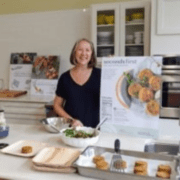
We dietitians were treated to a tour through the kitchen where we saw where the fishcakes are made, cooked and packaged.  Erika showed us all the ingredients and explained where she sources them and why.

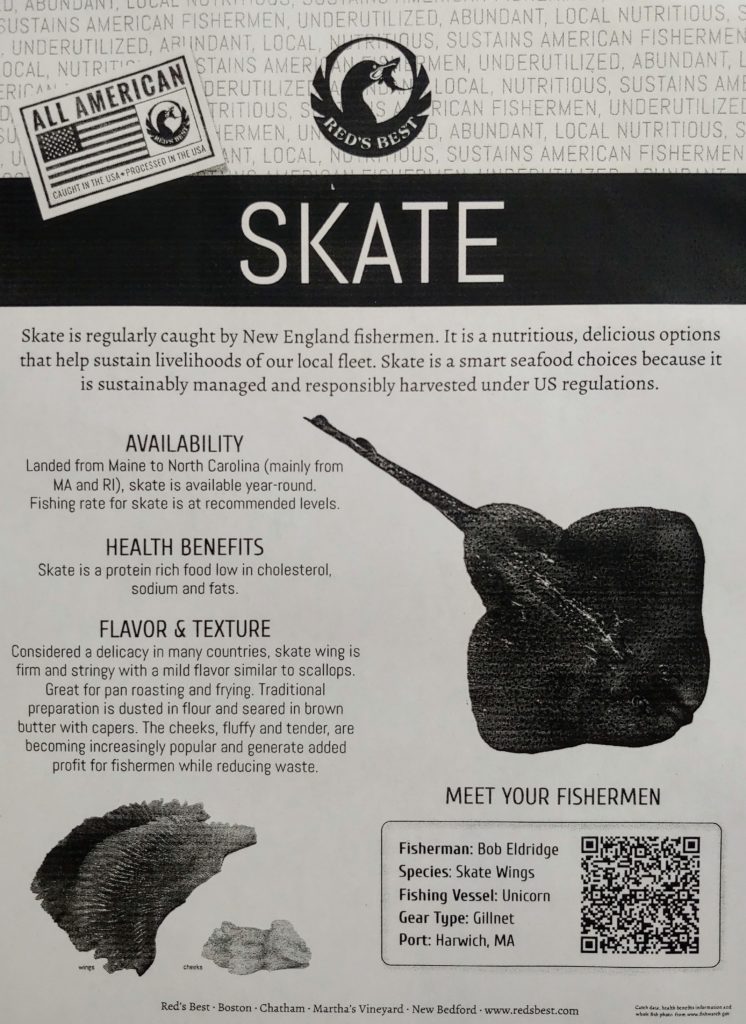
She uses skate as the main ingredient– which is caught locally, is sustainable, tastes amazing, and like all seafood is a rich source of protein and nutrients vital for health.

She also puts to good use locally grown, but misfit/cosmetically imperfect carrots and potatoes that would otherwise likely end up as food waste.

Ever try skate wings?

Erika in the kitchen about to serve us her tasty fishcakes along with a fresh salad!

Producing a delicious and nutritious ready-to-heat-and-eat food product like these fishcakes from “seconds” perfectly supports SecondsFirst’s 3 Pillars:

  • No Wasted Food
  • Proteins for All
  • Support Local

Not only is Erika putting her energy into something that’s meaningful to her, she’s positively impacting the environment and helping those who struggle with access to protein-rich nutritious foods.  Organizations like the Jonnycake Center buy her fishcakes and they will be available soon at the Dave’s Marketplace in East Greenwich.

Thank you Erika for all the good you are doing– you are quite an inspiration to me!

August is my birthday month.

Even though it falls in the final week, I start to think about it as soon as I turn the calendar over from July.  I appreciate those few weeks for reflection, mental preparation and the occasional mini-bursts of delight that upcoming birthdays can bring.  It may feel silly to admit it, but doesn’t that anticipation and thrill from childhood still live within our souls to some degree?

Birthdays can really make you think about life and how you got where you are.  Like how did I get to be 45?

I imagine life as this long timeline that goes up to 100.  You could live longer but truthfully most people die at some point before then.  I plot my current number and see how far along I’ve come and wonder what I might have left.   Remembering we aren’t here forever serves as a prompt to check in with ourselves and look at where we are and decide how we would like to take it from here.  If everything is good, then great– we can keep doing what we’ve been doing.  But if not– we can ask ourselves if there is anything that we’d like to change.

And so as the years pass, we live and we learn a few things about ourselves and about life, or so I like to think.

While many aspects of existence will always remain a huge mystery, I know I have acquired some valuable lessons that have helped me to become a happier, healthier person who has found peace with food and my body.

More importantly, this desire for a happy, healthy and peaceful relationship with food, eating and body image are very common themes that I see with my clients in my work.  It would be nice if l could just tell them what to eat and that would solve everything.  But there are beliefs and habits that need to be explored, mindsets to question and while nutrition IS about food, it’s also got a lot more to do with who we are as eaters.

3 Nutrition Lessons I Have Learned

1.  Let go of the idea that there is one right way to eat that applies to everyone. 

Please forget about your quest for the perfect diet.

As beautiful as this concept sounds, give up the search for an answer because it doesn’t exist.

I was on this pursuit for many years, believing that I would learn about the most healthful diet in the world and then educate as many people as I could.  It sounded simple enough.

Yet what I discovered was, as much as I’d like to think nutrition science has uncovered all the answers, it has not.  There are certainly a few agreed-upon fundamentals, but there is also a lot of disagreement among the experts.  And if you’re a nutrition-nut like me, you already know– the more you read the research (and how it’s actually done) and the various theories on which foods are going to prevent cancer and which are going to give you heart disease and kill you– that no one really knows.

Health is about so much more than just food– we’ve all heard about some little old lady who is 103 and eats bacon, ice cream and M&Ms every day.   And just as baffling are the sad stories of health-conscious eaters who exercise regularly but suffer a heart attack at 40.   This doesn’t mean you lose all hope though!

I still believe that a whole-foods diet with lots of fruits and vegetables and less sugar, fried foods and refined grains is the way to go.

But… I learned to lighten up on myself when I DID eat some ice-cream or bacon and stopped believing that I was damaging my health.

Quite possibly the stress and worry that I was eating something “not-good-for-me” was more harmful that actually eating that food.

Once I was able to accept that there is no magical formula for a perfect way of eating, I could turn inward and relax into figuring out which foods worked best for ME and my lifestyle.  Now I know what keeps me satisfied and feeling healthy and I eat to support that.  I learned how to keep myself balanced with a diet of mainly beneficial foods while leaving some room for less-healthful-but-oh-so-yummy foods– and it feels amazing to discard the idea of bad/good foods and to eat in the way that feels right to me.


2.  Be kinder to yourself and stop criticizing your body.

I don’t remember exactly when I learned this lesson but it wasn’t until sometime in my 30s.  That is later than ideal but what breaks my heart is that I see women in their 40s, 50s  and 60s who are still hating their bodies.   If you hate your body, do you think it’s going to be easy to eat in a way that’s nourishing and caring for yourself?

Once I shifted my focus from physical appearance to self-care, acceptance, respect and love, eating healthier became so much easier.

I had to learn that there are some things we cannot change, no matter how healthy we eat or how much we exercise.  Just like our height and our shoe size, we are born with genes for a specific body type and we only have a certain range of control over that.  What can really help is to practice transforming all the energy used disliking certain body parts into gratitude for all you have.

Quit doing the things that make you feel bad about yourself (staring at your thighs in the mirror?) and do more of what makes you feel good about who you are (wearing a favorite shirt or pair of shoes!)

Let go of the need to lose weight or change your body.

Also, I learned to forget about what other people think.  Because… they’re not.

As harsh as this sounds, they could care less if you or I don’t have a flawless body.  Humans are extremely self-absorbed. We tend to live in our own heads and largely stay preoccupied with our own stories (which revolve around us of course).  Know anyone like that?  It took me a while to realize that other people are far too wrapped-up with worrying about what other people think of them to be too concerned with me.  And that’s pretty freeing! 

Focus on doing what you want and being who you are.  Don’t be troubled with what you think other people think.


3.  If healthy eating is important to you, you have to make food a priority.

If it’s not, it’s going to be really difficult to eat well.  Everybody is busy with things to do–  I get it.  There are always excuses that can be conjured up to avoid healthy eating.  But recognize that all those items on your long to-do list have various degrees of priority– where is food and eating ranked?  Once you decide it’s got to take precedence and become a bigger focus, you will find the time you thought you didn’t have.  But you have to make that decision for yourself.

If it’s important enough to you, you will make time to do the planning, shopping, preparing, cooking and clean up.

I had to learn how to reprioritize and do all of these things too.  At first they were new and overwhelming, but they quickly became habits that now come naturally and that I even enjoy.

There was a time when I didn’t eat breakfast, rarely kept my kitchen well-stocked with good food and didn’t plan dinners which resulted in making some pretty poor choices for myself.  When I switched from vegan back to omnivore I had no idea how to cook any type of meat– but learning to do this was important to me and so I figured it out.  Start with something small and easy to accomplish and build from there once that one thing becomes a part of your routine.

When you make food a priority in your life you are putting yourself right at the top of your list and isn’t that where you should be?  

All that being said, there will be those “I just don’t care” attitude days when healthy food may not take precedence and this is OK and completely normal.  This absolutely happens to me too.  Some days are tougher than others (PMS, LOL?)   You haven’t made any mistakes or done anything wrong.  Know that there is always another opportunity to choose different foods right around the corner.

There is never going to be a certain moment in time when you’ll be ready to start.

It’s now.

There is no date in the future when you’ll get there.  It’s always now.

Healthy eating is an ongoing journey, not a destination that you reach one day and that’s it.  Keep your priorities clear, know what is important to you and you’ll be heading in the right direction.

 

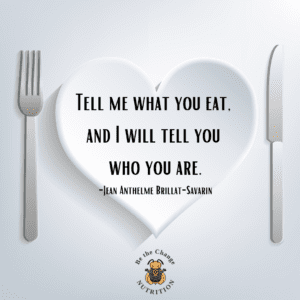
There is a lot of truth to that quote.  I find it fascinating to hear the details of what people eat.  Lucky me; it’s a huge part of my job!  What you eat really does say a lot about your personality, passions, beliefs and priorities.

And it’s not just the specific foods that tell your story.  Attitude towards food and eating can also disclose so much.  What are your reasons for choosing the foods you do?  Is health a factor?  Taste?  Convenience?  Cost?  Is what you eat simply out of habit?  Do you enjoy your food?  How much thought and planning are involved?  What emotions are attached?  Is food associated with gratitude and love or is there fear and anxiety?  Are food choices based on what makes you feel good versus what you think you should be eating?

Do you believe in a connection between what you eat and the person you are?

I just finished this book…


(OK, the truth is actually I finished this book well over a month (or 2?) ago, started writing this and then abandoned the draft while I was busy, busy, busy moving.)

…But read on!


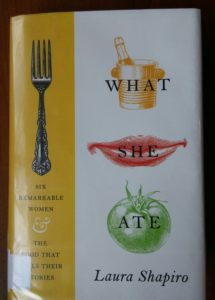
What She Ate:  Six Remarkable Women and the Food that Tells Their Stories.


Laura Shapiro is a writer who has “been curious for decades about what prompts people to cook and eat the way they do.”  (Hey, me too!)  These mini biographies are written from a unique angle that encompasses each woman’s relationship with food.  From Eleanor Roosevelt to Eva Braun, you’ll read about an interesting mix of women and their food.  I find the concept of how a person’s daily eating habits can reflect their personality pretty cool.

This book got me thinking… What does my diet say about me?

It’s an interesting question and if you haven’t pondered it yourself I encourage you to give it a shot.  It’s a complex topic and I think the answer changes as we go through life and learn, grow and evolve. My eating habits have said some very different things about me as I ventured through my childhood, my twenties, my thirties and now my forties.  Just as I was a developing person throughout those years, my eating habits shifted and yes, I think they did reveal many things about who I was at those various times in my life.


Here are some of the things I think my diet says about me now:

I’ve learned to trust, respect and feel grateful for my body:  Oh, was this ever a major battle throughout my twenties.  In comparison with my younger self, I am more forgiving, accepting and kinder.  And my eating habits certainly reflect that.  I remember a time when I felt food had power over me and I despised my body for not looking a certain way.  I even got angry and scared when I felt hungry thinking I shouldn’t feel that.  What an awful way to be.  I have learned to recognize and appreciate rather than ignore and fight my appetite (eat, not restrict) and to be thankful for my body and not believe there are parts that need changing.

I care about my health and happiness more than the size I wear:  I’ve changed my attitude about what is important in this life.  Not a skinny stomach at whatever the cost, but a strong, healthy and happy body and mind.  I’ve learned to eat nourishing foods that make me feel really good while limiting the ones that don’t– which resulted in regaining that trust between my appetite, my body and food.  Once I  believed in making my health a priority, I changed my eating to support that stance.

I am a planner and I like to feel in control:  I’ll admit I probably think about food more than the average person.  This doesn’t mean I am obsessed with food; it’s more of an instinct that I have to plan ahead for whatever I’m doing in life.  And it pays off when it comes to eating.  We all know what happens when we don’t think ahead about what we’re having for dinner.  I am not perfect at it 100% of the time but I do know that life is better when I’ve got a meal plan.  Plus, I’ve learned to improvise and can put together something halfway decent based on what I’ve got in the house.

I also like a morning routine that doesn’t involve planning:  Breakfast is my one meal that doesn’t involve planning ahead because I eat the same thing every day.  I love how I have found a breakfast that works for me.  For a while now it’s been 2-egg banana pancakes with almond butter and berries.  I can’t believe I am still not sick of them– but they taste insanely good and keep me full for several hours.  I never wake up with the question of what to eat.  One less thing to worry about makes for a more peaceful morning!

I am generally a fun and happy person who doesn’t take things quite as seriously as I used to:  I am mellowing out in my old age. 🙂  I am more relaxed, caring and kinder to others as well as myself.  I enjoy more of the foods that I used to consider off-limits.  Funny how when you realize you can have anything you want you find you don’t want all the junk you thought you did.  It took me many, many years to learn and accept that nutrition is by no means an exact science.  And all those theories on the best way to eat, well they are just that– theories.  Lightening up about food concerns and accepting the fact that there is no one right way to eat was extremely freeing.

I am concerned about where my food comes from:  Animal welfare, chemicals, natural choices vs artificial– these all affect what I eat.  But while I take these things into consideration and try to make good choices, I have also learned to loosen up a bit too.  I will pay extra for local or humanely raised chicken when I shop but I’ll also occasionally eat chicken at a restaurant where it’s undoubtedly come from a factory farm.  I am aware but I am not obsessive about it.  When I was vegan I had a much different perspective.  I have evolved from a belief that nothing should suffer to a belief that there is a circle of life that exists and something must die for something else to live and it can be cruel and scary but that is how life works.  Interestingly enough, I am a happier and more peaceful person with my current attitude.  How can that be wrong?

I believe what I eat makes the general statement that I care deeply about staying as healthy and strong as I can for as long as possible.  I want to do what I can for myself to remain self-sufficient and independent, both physically and mentally.  And at the same time as all of this, I also acknowledge that life all too often goes by too quickly.  And I really want to be a happy person and live this life with as much joy as I can.  The unexpected is to be expected and we truly only have control over only so much.  So while the foundation of my diet is built on wholesome, minimally processed foods I do also enjoy what I consider a healthy balance of lower nutrient foods.  Because– well, it just feels right to me.

Our eating habits can reveal what is important to us and what we see as meaningful in our lives.  Do we make the time to plan, shop and prepare meals?  Do we pay attention to the connection that exists between food and the body or is this ignored?  Do we choose foods that are a balance of pleasure and nourishment and that make us feel good?

While our relationship to food and eating says a lot, obviously there is much more to our personal stories.  The outlook and attitude we choose to take towards life, the way we handle what comes our way, how we treat others and the love and kindness we express are all pieces of our individual beings.  What we eat gives some clues but I think our overall habits and behaviors are what truly make us who we are.

What does the way you think about food and eating say about you?

A brand new year!  😀

I love that.  Just go back and do what it says if you glossed over it.

Now, how do you feel?  Ahh, that’s better, right!?

Imagine if you could remember to pause and just be for a few seconds here and there throughout your day?    

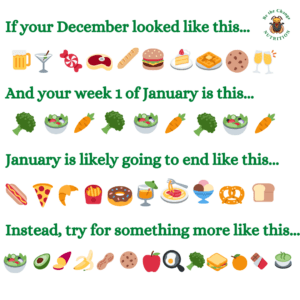
Happy New Year!  January is that special month when a lot of us decide now is the time to get serious and make those healthy changes we’ve been putting off.  If the fresh new year means another start to a diet that’s bound to fail (as diets tend to do), maybe you need to dig a little deeper and look at what is really keeping you from reaching your goals.  Hint:  It’s not that you haven’t found the perfect diet, it’s got a lot more to do with your daily habits and thought/belief patterns.

Understanding specifically what it is that is getting in your way is the key to change.  If you don’t really think about what exactly is holding you back, then you tend to stay stuck, frustrated and powerless.

I’ve spent some time contemplating what sets apart my clients who reach (or are on the path to reaching) their goals from my clients who have a harder time.

What I’ve found are 3 areas that come up again and again:

1.  Food Planning and Preparation

This is a huge one that stifles all those good intentions of eating a healthier diet.  Unless you are wealthy enough to hire a personal chef, there is no way around it.  Meal planning and preparation is ongoing and yes, it takes some time and effort.  Considering that we have to eat several times a day, every day, this means we have to be meal planning fairly often.  Embrace it rather than fight it and know that it does not have to be a major time-consumer or the difficult task that you might envision.

There are so many convenient food options and shortcuts available that I think we often take for granted how truly lucky we are.  Nearly everyone has a grocery store within a couple of miles with everything necessary to make a decent meal.  Be thankful you don’t have to gut and clean your fish and meats like our ancestors did– do you ever consider how incredible it is that they come neatly packaged and ready to cook?  Fruits and veggies are available pre-cut, spiralized and even riced to eliminate the time it takes to prepare them.  And can you believe people once had to wash and chop up a head of lettuce?  😉

That being said, I will add that even with all these prepared foods, I still think it’s comforting and good for the soul to get into the kitchen as much as possible to chop, slice, dice, bake, experiment, taste and connect to our food more.  Food preparation doesn’t have to be a stressful, hectic event.  It can be meditative if you let it.  Doing the dishes and cleaning up is a perfect time to focus on your breath, slow down and reconnect with yourself.

I understand some schedules make it almost impossible to dedicate much time for cooking at home– but if you decide you want to make it a priority it can certainly be accomplished.

2.  Mindset/Knowing Your “Why”

Mindset has practically everything to do with success.  I am a firm believer of:  ‘You can have anything you want if you put your mind to it.’  But you have to want it more than you want to stay where you are now, as comfortable as your current zone may be.   You also have to clearly understand WHY you want to make changes– you need to see the benefit. 

Because changes ARE going to take effort!  You have to see and believe that the result is worth the work and energy.  And oddly enough, once you put the “work” and “energy” into action you realize that they actually aren’t the horrible work and energy you imagined and feared.  Find the meaning behind what you’re doing and everything flows more naturally.

You also need to keep that “why” flame burning consistently.  Sure, it’ll go out periodically where you’ll say what the hell and indulge in a night of pizza and ice cream.  No biggie. What will make you successful is you’ll know that it’s OK,  you won’t worry about it and you’ll move on.  The next day you’ll be back to your healthy habits, reminding yourself of the person you want to be and how that type of person eats and lives.  Remember, perfection is not the goal.  A balanced diet can most definitely include sweets and splurges!

3.  Connection to Your Body (and Befriending it!)

Listening to your body can be a really tough one.  But I promise it gets easier with practice.  A lot of the challenge has to do with the fact that our bodies tend to crave the foods that we’re used to eating and when we’re used to eating them.  We often eat out of habit and on autopilot and this can translate into eating low-nutrient foods and much more than we need.  Sometimes we need to introduce new (more nutritious) foods to our body.  Sometimes we need to learn to distinguish between true, physical hunger and eating for other reasons.

Connecting with your body means checking in with yourself throughout the day to see how you feel– hungry?  getting hungry?  fine for another couple of hours?  Come to know which foods and what amounts you need to satisfy you.  Also, pay attention to which foods make you feel good as well as which make you feel not so great.  Everyone is different.  Be able to predict when you’ll need to eat again and plan for it.  This will help you avoid getting to that point when you are downright ravenous– because you know what happens.

Connecting with your body also means figuring out what you need in place of food when you’re not hungry.  Instead of poking through the fridge when you know you don’t physically need food, ask yourself what it is that you do need.  Emotional eating is turning to food to feel better.  If you struggle with this,  pause before eating and ask yourself “Am I really hungry right now?” If not, the next question is to ask “What is it I need to do to feel better?”  Eventually you will learn that eating to soothe yourself is not usually helpful and there are more appropriate and healthier ways you can handle those uncomfortable feelings that won’t contribute to weight gain.  Not to mention, this is how you grow as a human being– by allowing yourself to feel and process your emotions instead of pushing them down with food.

Connecting with your body means eating what works for YOU.  Doing the standard “diet” thing like eating a 3 oz chicken breast, 1 cup of steamed broccoli and a half cup of brown rice actually doesn’t work for a lot of people.  Following a meal plan from the internet or a magazine really doesn’t last long for anybody, except maybe the person who made it up.  “Just tell me what to eat” isn’t tuning in to your body at all.  Instead of listening to external messages about what your body needs, I teach my clients to do more inward connecting to learn which foods make them feel their best.

Along with connecting, you also must stop the war with your body and start a friendship.   I know, easier said than done, right?!  But…this can be a huge breakthrough and it’s absolutely necessary.  Understand that you’re not going to see change until you begin working on self-acceptance and self-love.  I’m not saying you have to immediately fall in love with your thighs but begin with a bit of compassion and gratitude in place of any self-loathing thoughts.  Start simply with being a bit kinder to yourself (and others!)

Do any of these resonate with you?  While unfortunately I can’t be there to prepare your meals, we can have a conversation together to help you figure out what is important to you in your life to help inspire the motivation for making lifestyle changes.   I can help you come up with some super-convenient, easy and healthy meal options if you need them.   I can also assess your eating habits to help you figure out what you may be eating (or not eating) that isn’t working for you and suggest alternatives.  It can be overwhelming to make changes alone– having someone on your side who is not there to judge you, but to guide and support you can be enormously beneficial to your success.

“Write it on your heart that every day is the best day in the year.”

-Ralph Waldo Emerson

Hoping to see you in 2018,

Corinne 🙂

While food is a biggie, it’s only one piece in the complex puzzle of enjoying a healthy life!

It’s all too easy to get caught up in the mindset that a perfect diet is the most important element to health and wellness.  But something crucial to remember is… it’s not all about the food!  You could be eating the most “perfect” diet in the world (whatever that is) but still not feeling the way you want to feel– which likely could mean that it’s not what you’re eating or not eating but something else in your life that needs attention.
We’re missing a lot if we focus too intently on exactly what and how much to eat and not on the other areas of life– like ensuring quality sleep and relaxation time, pursing friendships and social connections, lightening up with laughter, treating ourselves to sunlight and time in nature, exploring our favorite creative outlets, moving our bodies, doing kind things for others….just to name a few.

Oh, and loving a DOG!!

Bonnie is my gorgeous almost-2-year old half-Chihuahua mutt:


She makes me laugh…

Waiting for trick-or-treaters.

What a stinker.


Gets me walking, running and playing outside…

Teaches me to relax…

And no, having a dog is not without its challenging moments:

It was evident early on that she was not a fan of crates and much preferred destroying doggie beds to sleeping on them.

And yoga in the living room at home is also happening a lot more infrequently.


The love outweighs the frustrations and I am quite certain that having Bonnie in my life has only enriched it.


Did you ever consider how dogs can contribute to a healthy life?  They can have a beneficial impact on both physical and mental well-being.

Dogs love to get out and exercise in the fresh air.  Join your pup for a walk, run or game of ball and you benefit too.

Looking into your dog’s eyes naturally causes us to release a hormone called oxytocin which creates positive feelings of bonding and love.  These feelings are good for you!  Dogs also help reduce negative emotions associated with anxiety and depression.
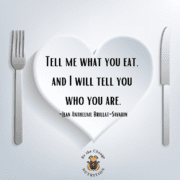
Science Says Your Pet is Good For Your Mental Health

-Times Magazine article sharing some research on how “Animals of many types can help calm stress, fear and anxiety in young children, the elderly and everyone in between.”

My pup had definitely impacted my life.  I honestly never knew I could love a dog so much.  She brings a smile to my face and lights up my heart with warmth every single day.
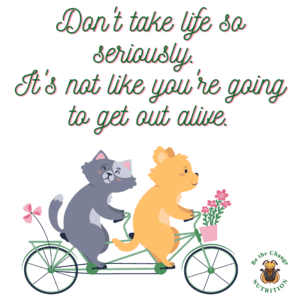
You don’t need a dog or a pet to be healthy of course.  But it can help!  We can learn a lot from our animal friends.  Sometimes we get excessively hung up on the effects of diet and forget to relax, trust and enjoy life more.

What we eat does matter.  But all the pieces of our lives are interconnected.  For example, have you ever noticed that when you’re in a regular routine of exercising that you find healthy eating comes more naturally?  When we do something good for ourselves it has a ripple effect.  If you’re struggling or stuck with the eating/food piece of your life, take a step away from that for a bit and really take a look at another area of your life that may be out of balance.  Shift your focus from the food to another realm of self-care and see what happens.