Girl reading book called Just Eat It.

                                                          Just Eat It. 🍩

I love reading about the science of how food affects our bodies AND anything having to do with the psychological aspects of eating.

  The two are definitely intertwined.

Having an understanding of each is crucial to being a dietitian in private practice working with people looking to manage everything from diabetes to digestive distress to disordered eating.  This book perfectly combines food science with intuitive eating and it’s absolutely packed with tons of important information and practical tips.

👍🏻👍🏻 Two thumbs up for Just Eat It by Laura Thomas, PhD.

I highly recommend this book for anyone who wants to get off the dieting roller coaster, stop obsessing over food and figure out how to just eat normally again.  If you struggle with a poor body image or orthorexia (an unhealthy preoccupation with healthy eating) this is a must read.

Just Eat It explains how the messages we’re exposed to about food and our bodies can cause disordered eating habits and a negative body image.  There are reasons why our relationship with food is so unhealthy and why so many people hate their bodies and stress over everything they’re eating.  It’s basically been taught to us.

It’s something we’ve learned and now it’s something we have to unlearn.

Quote: The biggest lie of diet culture is that you will be happy when you reach this elusive body standard.

You will not find any meal plans or diet dos & don’ts in this book. 😮‍💨

Just Eat It emphasizes the importance of self-compassion and mindfulness– Along with how to work at these things to help you go from disordered eating to intuitive eating and feeling good about yourself.

You’ll read about giving yourself permission to eat (and addressing all the fears that come with that).  You’ll learn the steps to take to help you trust your body to guide you towards what, when and how much to eat.

She explains how by taking foods off a pedestal they lose a lot of their allure.  When you stop restricting them, they actually become less exciting and tempting.  A few more valuable things you’ll learn are:  The biology of how fullness & satiety work, how to tune in to your body cues & feel your fullness, how to pay attention to the way different foods make you feel, how hunger hormones work and how to differentiate between emotional & physical hunger. You’ll find out how to deal with your (irrational) inner food critic and rewire your brain. She also debunks several nutrition myths that may be preventing you from properly nourishing yourself.

I loved this book so much because it aligns with a lot of what I work on with my clients at Be the Change Nutrition.  Yes, we talk about food, but creating a healthy relationship with food & your body involves so much more and that’s what you’ll find in this book.

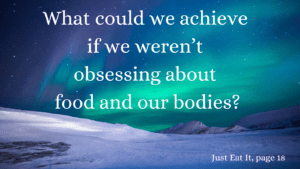
Quote: What could we achieve if we weren't obsessing about our bodies?

If you’re not living your happiest, healthiest life because of your food and body issues…

🍩Just Read It! 🍩 

Added sugar and candy.


You don’t need a degree in nutrition science to know that sugar isn’t a health food.

But sugar can be confusing. 🤔

What’s the difference between naturally occurring sugars and added sugars? 🍎🍬

Naturally-occurring sugars:  Sugar is found naturally in fruits, dairy and even in some vegetables. 🍇🥛🥕  These sugars are bound up with health-promoting compounds like vitamins, minerals, antioxidants and fiber.  Sugar has not been added to these foods; it is there naturally.  These sugars are digested more slowly due to the presence of fiber or protein and are found in foods that support a healthy body.  Include a wide variety of these foods in your diet.

Added Sugars:  Added sugars are exactly what they sound like:  Sugar that is added to food or beverages.  These sugars contain minimal nutrients aside from providing carbohydrates.🥤🍪🍦 The biggest sources of added sugar are: sugar-sweetened beverages like sodas, fruit drinks, sports drinks & coffees and sweet desserts like cookies, ice-cream & cake. These sugars are quickly digested, can raise blood sugar levels rapidly and are associated with many chronic diseases.  Set limits with added sugars.

🤷🏻 How much is too much added sugar?🤷🏻

The Dietary Guidelines for Americans (DGA)  and the World Health Organization (WHO) both recommend consuming less than 10% of calories from added sugars/day.

Let’s take a 2000 calorie diet for example.

10% of 2000 is 200, so it is recommended to consume less than 200 calories of added sugars.

Sugar has 4 calories per gram so….

200/4  = 50g max of added sugars

For reference, 4 grams of sugar= 1 teaspoon

This equals about 12 teaspoons of added sugar/day.

Which translates into:

12oz Coke (39g added sugar=10 tsp) + 2.5 tablespoons of ketchup (10g added sugar= 2.5 teaspoons sugar)


The American Heart Association (AHA) sets its recommendations lower:  Less than 6% of calories from added sugars.  They also say under 36g (=9 teaspoons) for men & under 24g (=6 teaspoons) for women.

Taking the same 2000 calorie diet, 6% would be 120 calories or 30g max of added sugars.

This equals about 7 teaspoons of added sugar/day.

Which translates into:

1 tsp sugar in coffee (4g added sugar= 1tsp) + Icelandic yogurt (6g added sugar= 1.5 tsp) + 1/2 cup Prego sauce (4g added sugar= 1 tsp) + 3 Oreo cookies (14g added sugar= 3.5 tsp)

OR: One serving of Ben and Jerry’s Cherry Garcia ice cream (2/3 cup) with 31g added sugar (>7 teaspoons).

You can see how quickly those added sugars add up! 🫢


What you can do:  Start by looking at where the added sugar in your diet is coming from.  Read labels.  Often it’s in sneaky places like salad dressings, granola, coffee creamer or bread.  ✨We don’t need to totally eliminate all added sugars from our diet. ✨ Many of these foods are enjoyable and they often help us eat more of the good stuff.  If that honey mustard salad dressing motivates you to eat a big bowl of nutrient-dense veggies, then it’s probably worth it!  Sugar is not toxic and sugar does not cause obesity.   However, most people are eating an excessive amount and that can negatively impact health.  The important thing is to be mindful of the quantity consumed (everything in moderation🙄😅) and use the above recommendations to see if and where you might want to make some changes. 💗


Motivation to eat less sugar.


Oats, peanut butter & dates fuel your body with nutrition it can use.  💪🏻

🌟 Oats provide fiber to help maintain balanced blood sugars and cholesterol levels as well as promote optimal digestion.

🌟 Peanut butter contains protein & healthy fats that keep you full.

🌟 Dates offer natural sweetness along with minerals, antioxidants and fiber.


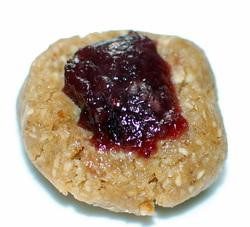
No-Bake PB&J Thumbprint Cookies:

Ingredients:
💗 1 cup rolled oats
💗 1/2 cup medjool dates (pitted)
💗 1/2 cup peanut butter
💗 2 Tablespoons maple syrup

…and your favorite jam for topping the cookies.


Directions:
💗 Add all ingredients (except jam) to food processor and blend until a dough forms. 
💗 If the dough is too dry (not sticking to form balls) add a bit more maple syrup.  
💗 Roll into balls and slightly flatten.
💗 Make a thumbprint and spoon in some jam.  No baking.

💗 Store them in the fridge or freezer. Enjoy!


A balanced diet is a cookie in each hand.  ~Author Unknown

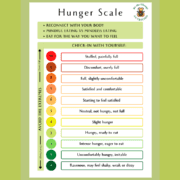
printable hunger scale.

Years of dieting can cause a disconnection from your internal signals.

A Hunger Scale is a tool to help you connect to your hunger & satiety cues.

It’s a way to increase awareness, which is the first step towards behavior change.


3 Ways a Hunger Scale can be helpful:


1️⃣ Do you go too long without eating, often finding yourself at a 0-2?

Use it to check in with your body earlier to notice signs that you need to eat.


2️⃣ Do you tend to overeat to the point of feeling uncomfortable (8-10)? 

Use it to check in with your body while you are eating to learn when you’ve had enough.


3️⃣ Do you find yourself mindlessly reaching for food between meals?

Use it as a pause button to check in with your body & identify what’s triggering the urge to eat.

The scale can help you decide if you need food or if you are actually comfortable and could respond differently.


 Aim to stay within 3-7 most of the time.

That being said, there are going to be times when you may need or want to eat when you aren’t hungry and that’s ok.

There are going to be times when you eat beyond a 7 and that is ok too.

There are many factors involved besides hunger/fullness when it comes to eating.

Look at it as a tool to get curious & gain insight into your habits and behaviors.

At first you may not know how your body feels or what it needs.

Practice and it will get easier and easier.


💗 Reconnect with your body and eat for the way you want to feel!💗


Print your FREE Hunger Scale here!

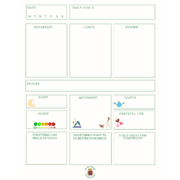
Free printable food journal.

The first step towards change is 👀AWARENESS 👀of your behaviors.

✨You need to know and understand your habits in order to form new ones.✨

Keeping a wellness journal like this for a few days (or longer) can give you valuable information.

Journaling makes you MINDFUL of everything you’re eating & drinking, how you’re sleeping, your movement and your mood.

All of these are interconnected and contribute to your health. 🍴💧💤🏃🏻‍♀️😬☺️

Reflect after a few days.

Are your meals and snacks balanced? 🍗🍠🥦🥑

How are your moods and energy levels and how do they affect your eating? 😢🙂🤪

Same with sleep. 🥱

What kind of activity are you doing to move your body? 🏌🏻‍♂️🤾🏻‍♂️🚴🏻🏋🏻

Are you eating fruits and vegetables daily? 🍎🍌🥗🥕

How much added sugar are you consuming? 🍭🍫🍰🍦

Do you find yourself reaching for food when you’re not even hungry? 🧐

You will notice what’s going well 😀along with what you’re not happy with. 🙈

I’ve also included space for setting personal goals for your day & remembering something you have to be thankful for.🙏🏻

There is also room for acknowledging an accomplishment, identifying something you want to improve upon and brainstorming ideas for what you want to eat tomorrow.

And don’t forget, your dietitian is always here to help you in your wellness journey.

💗💗💗💗💗

Print your free Food and Wellness Journal sheet here!


What are macronutrients anyway?

Macronutrients are nutrients we need in large (macro) amounts.

These include:  Protein, Fat and Carbohydrates.  They provide calories.

Micronutrients are needed in smaller (micro) amounts and include vitamins and minerals.  They do not provide calories.

Very specific grams of macronutrients aren’t something I usually put a lot of focus on in nutrition counseling.   

But sometimes a client wants to know the number of grams of protein, fat and carbohydrates that is recommended for them.  

A fair question for a dietitian!


How to calculate macros:

Step one is to determine approximately how many calories your body needs.

I use the Mayo Clinic’s Calorie Calculator:  

https://www.mayoclinic.org/healthy-lifestyle/weight-loss/in-depth/calorie-calculator/itt-20402304

(Please know that this is not an exact science.)

Once you have your (estimated) calorie number, you can now calculate your macronutrient goals. 

This will give you an idea of how many grams of each to aim for each day.


In my example I’m using a 2000 calorie goal with 50% carbs, 20% protein and 30% fat.  
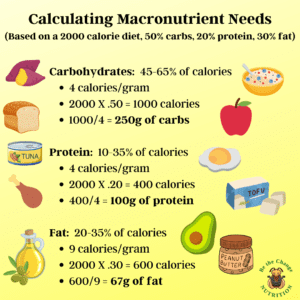
How to calculate macronutrient needs.

I went middle-of-the-road, but as you can see, there are ranges.

Carbs range between 225g-325g/day.

Protein ranges between 50g-175g/day

Fat ranges between 44g-78g/day

There is quite a bit of wiggle room.

⭐Most people’s normal diets naturally fall into these macronutrient ranges.


Should you be counting your macros?

There is no right or wrong answer.

Macro calculating can be a good learning tool to ensure that you are within the range of your needs.

If you’ve been following a specific diet like: low-fat, low-carb or vegan, and it’s not working for you, checking your macro balance can help you identify imbalances and make healthful changes.

But just because you’re eating within your macronutrient ranges doesn’t mean that you’re getting the micronutrients, fiber and phytochemicals that support health.

It also doesn’t mean that you’re eating foods that you enjoy and that make you feel good.

And if you’re trying to break away from all the counting and tracking you’ve done from years of dieting, this can just add too much stress.

It can feel restrictive, become overly consuming and trigger disordered eating.

If you’re looking to obsess less about food and eating, then this isn’t recommended.


If you’re curious about your macros, I am happy to help you calculate them.

But I’m not here to teach you to micromanage your diet through tracking and counting.

Nourishment, nutrition and health are about so much more.

I’m here to help you learn how to eat and create habit changes that will enable you to feel good in your body and reach your health goals through a combo of education and tapping into your own internal nutrition intuition.  Let’s talk food, not numbers!

💖
 

Quinoa is simple and healthy… It cooks up in about 15 minutes in water or broth. Which is fine! But for a change of pace, why not add in a few extra ingredients for some variety?

My 2 favorite quinoa recipes are easy and only require 4 ingredients (not counting water)!

But first, a few facts about quinoa:

Quinoa is:

  • Gluten-free
  • Actually a seed but cooks up like a whole grain
  • Quick cooking (15 minutes)
  • Considered a complete protein (1/4 cup dry, before cooking=6g)
  • High in fiber and iron
  • A good source of B vitamins and magnesium

Now that we know a little more about it, let’s move on to the recipes…

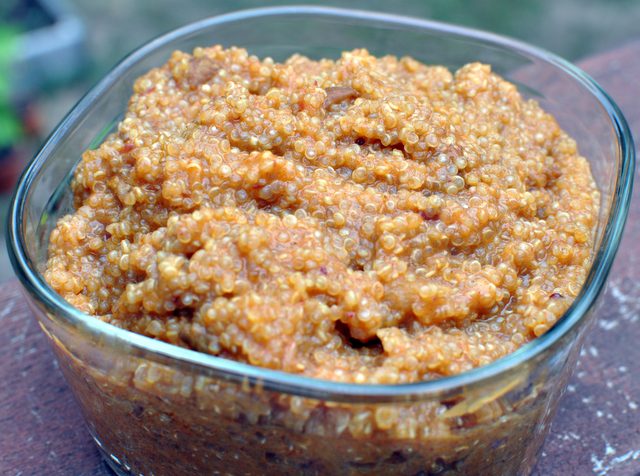
Sweet Coconut Red Curry Quinoa

A little spicy, a little sweet and a lot of fantastic flavor! 

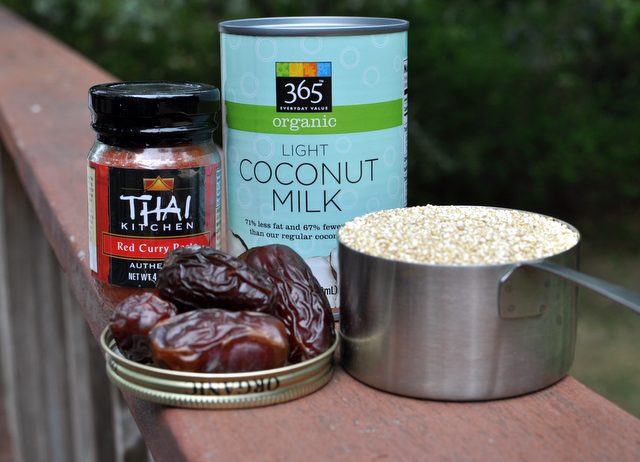
Light coconut milk, quinoa, medjool dates and red curry paste.

Ingredients:

  • 1 cup quinoa, rinsed
  • 1 can light coconut milk
  • 1-2 tablespoons of Thai Kitchen Red Curry Paste
  • 5 medjool dates (more or less, depends how sweet you like it)

Directions:

  • In a medium saucepan, bring quinoa and coconut milk to a boil.
  • Chop dates and add them to pot.
  • Stir in the red curry. 
  • Reduce heat, cover saucepan and simmer for about 15 minutes, stirring occasionally.


Apple Raisin Peanut Butter Quinoa

This was something I made on The Rhode Show when I was a Nutrition Excellence Coach for Whole Foods Market:

Ingredients:

  • 2 1/2 cups water
  • 1 cup quinoa, rinsed
  • 1/2 cup raisins
  • 1 medium apple, chopped
  • 1/2 cup peanut butter

Directions:

  • In a medium saucepan, bring water, quinoa and raisins to a boil.
  • Reduce heat, cover saucepan and simmer for 12 minutes.
  • Stir in apple.
  • Cover and cook for 3 more minutes.
  • Stir in peanut butter.  Sometimes I add cinnamon too.  Serve warm.
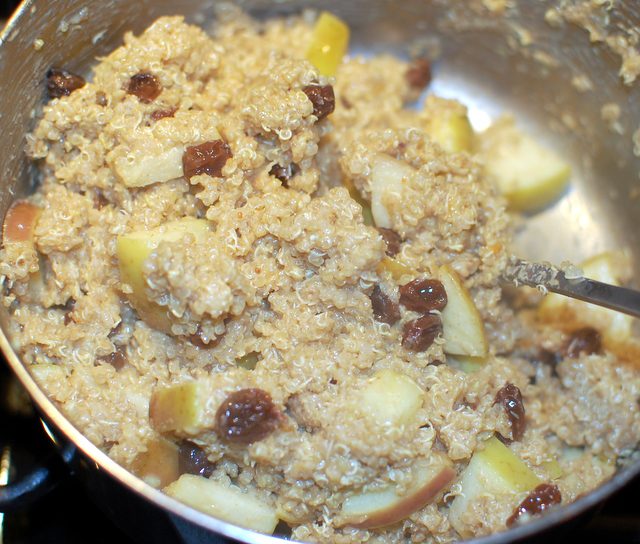
Quinoa, apple, raisins and peanut butter

🌟 As you can see, quinoa is a versatile food!

✔️ Try eating the Apple Raisin Peanut Butter Quinoa for breakfast or lunch paired with a yogurt. Or get creative: Start with a bowl of plain quinoa and eat it like you would oatmeal, adding in nuts, seeds and fruit. Quinoa even makes a great salad topper.

✔️  Try the Coconut Red Curry Quinoa as a side dish to go with seafood, chicken, beef or tofu along with a cooked vegetable like broccoli, asparagus, Brussels sprouts, kale, collard greens, Swiss chard or spinach.


Pan of oven-roasted vegetables

🥦 As a dietitian, part of my role (along with reminding you to eat your vegetables) is to help you find practical ways to make vegetables enjoyable.

Today I am here to hopefully inspire you to try oven-roasting veggies! 😍

We all know how good they are for our health– all those vitamins, minerals, phytochemicals, antioxidants and of course the fiber.

With so much controversy in nutrition, one thing just about all the experts agree on is that vegetables are awesome for us!

🍅🥕🍠🥦🍄🧅🌶🍆🧄

But most of us really struggle to eat enough.  Even when we know we should eat them and we want to eat them– it can be tough to make it happen. 

If your goal is to increase your vegetables but you’re stuck, ask yourself why:

😝 Do you think you don’t like veggies?

🌟 Taste buds can change over time. And different cooking methods and seasonings can make a major difference in taste and texture. It’s a fact that you can learn to like vegetables!

😣 Do you believe veggies are too much work?

💓 There are just too many health benefits to eating them to not make the effort. Effort-based rewards (like making food) are keys to happiness and achieving a sense of accomplishment & satisfaction in life!

🥱 Are you bored with the same old veggies you always make?

👩‍🍳 Search for new recipes or watch cooking shows for inspiration. Pick a new vegetable to try at the store or at a farm stand. Get creative and out of your comfort zone!

😏 Or this one that makes me smile: “They go bad in the fridge before I eat them.” 

🤣 That is only because you let them sit there instead of cooking and eating them! Buy less and shop more often to avoid this. Utilize frozen veggies too. Check your fridge daily to see what needs to be eaten soon and plan your meals around those vegetables.

➡️ Whatever your reason, it is a limiting belief.

Limiting beliefs are thoughts you believe to be absolutely true– only they are not– instead, they hold you back from success!

If you want to get more nutrient-rich vegetables into your life, let me suggest one of my favorite super-easy and delicious ways to cook vegetables…

OVEN-ROASTED!

Pan of veggies before roasting.
Before
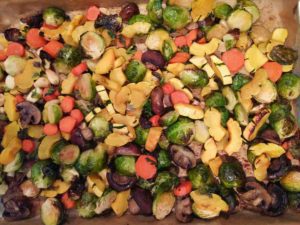
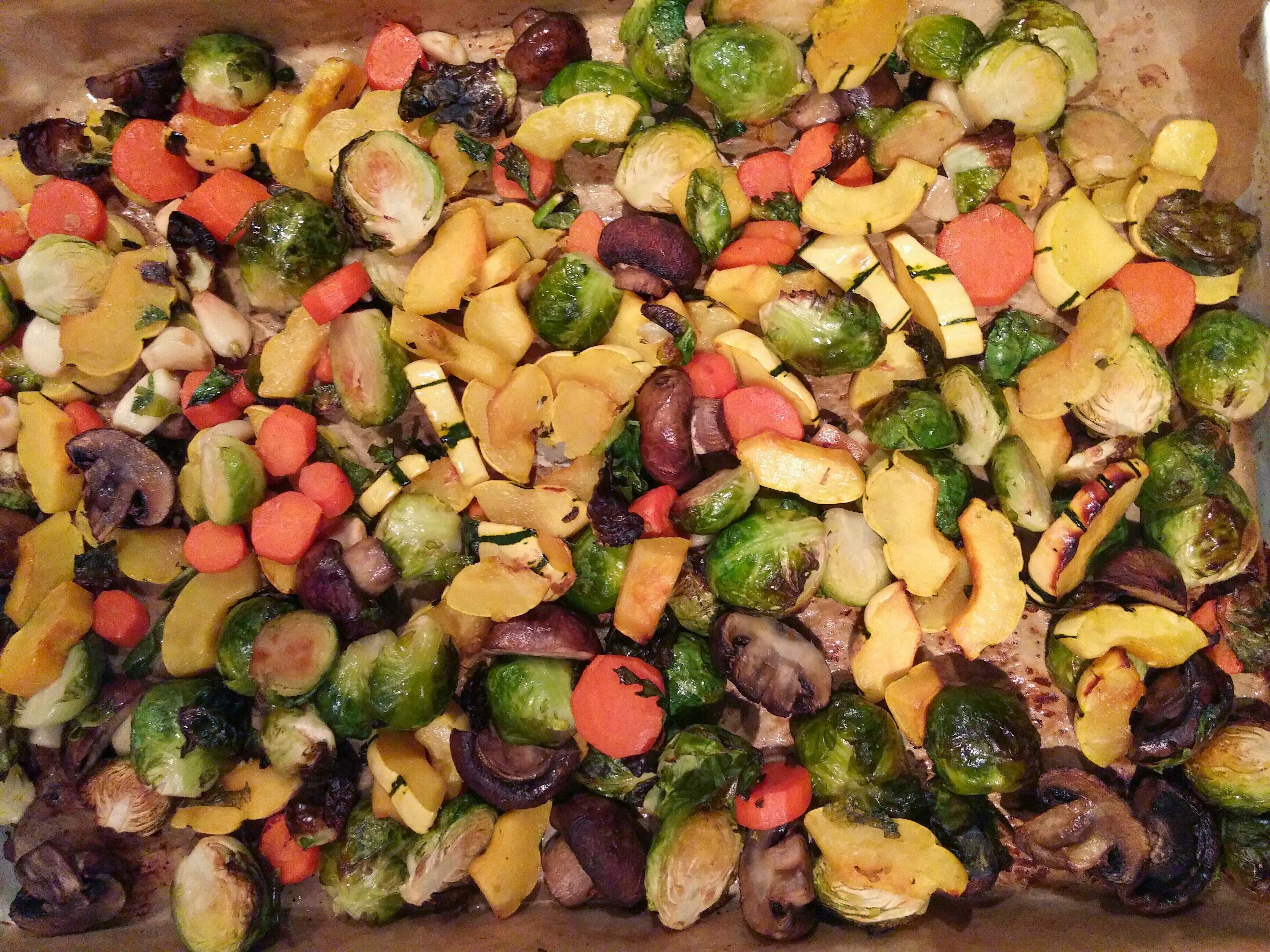
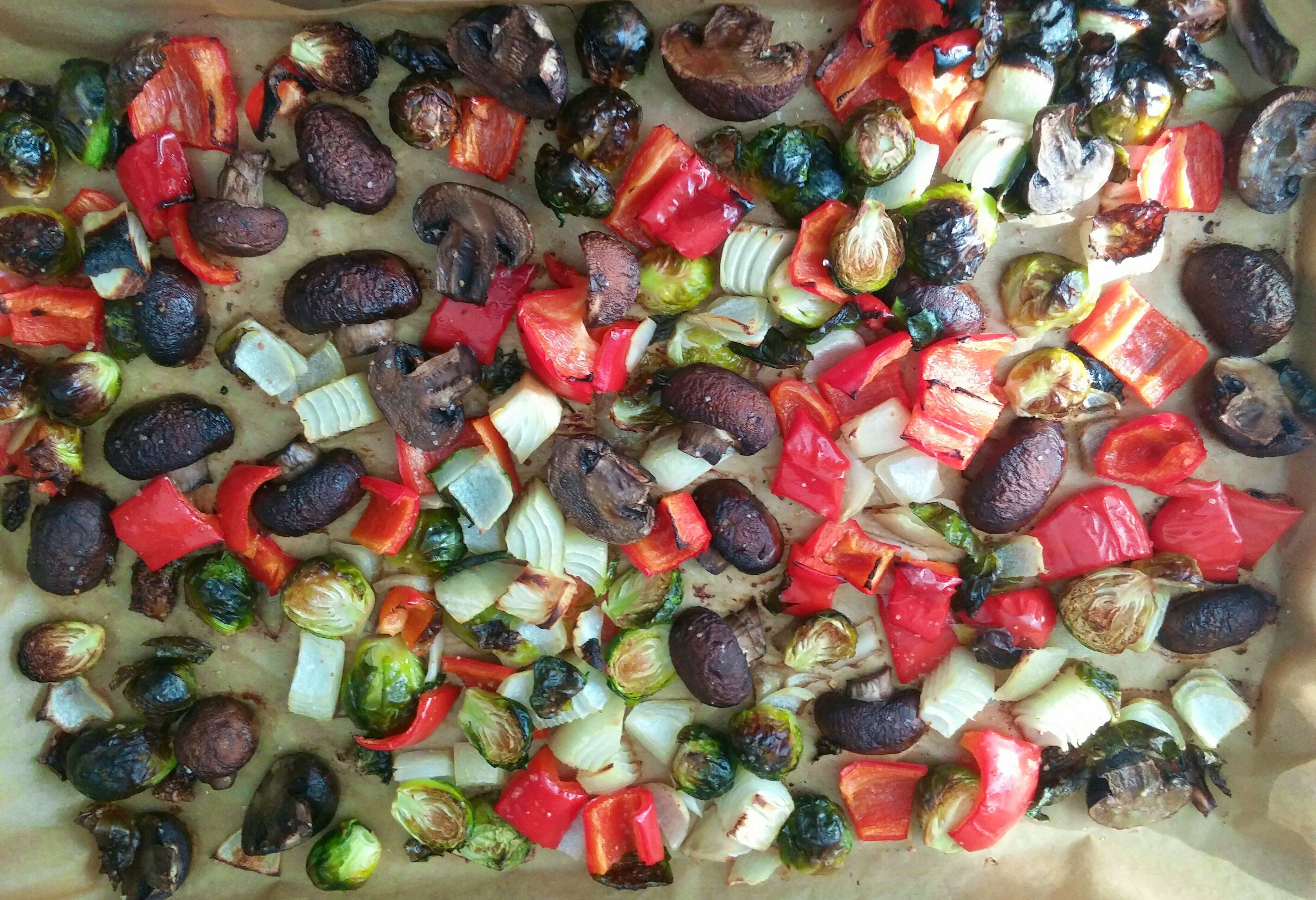
Pan of roasted veggies.
After

🤭 Guess what? You really can’t mess up oven-roasted vegetables.

Here’s how I do it:

  • Pre-heat oven to 425F.
  • Wash and chop up whatever veggies I have.
  • Toss the veggies with olive oil (2 T?  I don’t measure) and salt, garlic powder or any seasoning.
  • Spread evenly on parchment lined baking sheet.
  • Bake for 30-40 minutes or until tender.
Pan of roasted mushrooms, peppers, onions and brussels sprouts.

A few more reasons to try it if you’re still not convinced:

  • Perfect opportunity to put on music and chop away any worries of the day. 🎵
  • Warms up the house. 🔥
  • Fills your home with comforting, mouth-watering aromas. 👃
  • Makes a nutritious and simple meal paired with a protein like seafood, chicken, pork, eggs, tofu or beef. 🍽 Be sure to add in some more carbs if you need ’em.
  • Packed full of a wide range of nutrients for energy and disease prevention. ✨
  • Great way to increase fiber intake and promote good digestion and gut health. 💗
  • Fills your belly for not a lot of calories which can support weight loss goals. 👍
  • Leftovers for several days of lunches and dinners. Cook once; eat 2 or 3 times. ⌚

Not sure which ones to try?  Pick one, two or the whole list!:

  • Onions 🧅
  • Garlic 🧄
  • Red, Yellow, Orange or Green Peppers 🌶
  • Zucchini 🥒
  • Mushrooms 🍄
  • Broccoli 🥦
  • Cauliflower 🤍
  • Brussels Sprouts 💚
  • Asparagus 🌿
  • Tomato 🍅
  • Butternut Squash (any winter squash) 🎃
  • Eggplant 🍆
  • Carrots 🥕
  • Sweet Potato 🍠
  • Green Beans 💚

Hopefully all this talk about roasting vegetables inspired you. 😄 

If it even sparked one person to try something new or reminded someone of how easy and tasty roasted vegetables can be, then this dietitian is happy! 😊

Did you know that most health insurance plans will cover appointments with a Registered Dietitian?  😃

Are you trying to lose weight but can’t seem to change your habits? 😩  

Or maybe you know that your health issues would improve if you changed up your diet? 🍽️

👩‍⚕️  Many people hear from their doctors that they should lose weight– but most doctors aren’t taught to discuss diet and nutrition with patients.  While doctors do wonderful work, the majority of doctors do not have the time to spend with you to discuss HOW to go about losing weight or manage your health concerns through diet.

Man asking doctor: Hundreds of years of medical progress and all you can suggest is to eat less and exercise more?

Typically the most you’ll hear about what to do about your weight is depicted in the cartoon above. 

The “eat less and exercise more” message sounds great in theory, but honestly, how is it working for you?

🆘 This is where a Registered Dietitian comes in. 

A dietitian will take an assessment of your eating habits and come up with a plan tailored to YOU.  This plan will focus on habit changes designed to get you where you want to go in respect to your health and weight goals.  Having a plan is half the battle.  The other half is the accountability and support that follow-up visits provide.  Here is where your progress is monitored– and if you’re struggling, you’re going to leave the session knowing exactly what you need to do to get moving in the right direction again. 👍

If you’ve been stuck trying the same tactics and they aren’t working, consider having a trained set of eyes look at your diet and eating patterns and work with you to make positive changes in your life.  You don’t have to figure these things out alone.  And if your insurance will pay for it– how can you not take advantage of that benefit?  😍

Insurance plans vary with many covering an unlimited number of sessions while others cover a set amount.  A few have co-pays and certain plans will only cover specific diagnoses.  Call the number on your card or go online to find out the details of your individual plan.  Or reach out to me and I will look into your plan for you.

Looking forward to seeing you soon!


Think about how vastly individual we all are with our eating habits.  And how different our goals are.

We’re in all kinds of various places with what, when, why, how and how much we eat.

Factors like taste preferences, work/life schedules, finances, cooking abilities, etc all come into play when it comes to eating.

It’s not helpful for me to simply say, ‘Hey you guys– eat this for breakfast.’

Someone’s not going to like it, someone else won’t have the time to make it and someone else will have no clue how to make it in their kitchen.

So, when someone asks, “What can I do to eat better?” the answer isn’t as easy as giving the same recommendation to everybody.

In order to help you I have to know about you, your life and your eating behaviors. Making dietary changes is a personalized endeavor.

What I do is I meet you where you are.

Some of you want brand new ideas of what to eat and we can do that.

But a lot of you aren’t ready to make huge changes with lots of new foods and that is OK!

And for you, my advice is:

Let’s make what you’re currently doing just a little bit better. 👍

I use this approach in nutrition counseling sessions to help you form new, long-term, sustainable healthier eating habits.

You can apply this to your personal eating habits to improve your diet on your own without my help (although having a dietitian’s input can be helpful!)

Think about a habit you have that you’d like to change and ask yourself this question:

Here is the above question applied to 3 examples of random scenarios:

1. Old habit: Every morning you order a fast food egg and cheese sandwich plus a large frozen butter pecan coffee. You are not ready to completely give these up yet.

New habit: Pack along some blueberries, strawberries, melon, kiwi, oranges, etc to eat with your sandwich. Order a smaller version of the frozen coffee drink and drink 16oz water.

✔ You’re making breakfast just a little bit better by adding fiber, antioxidants, vitamins and minerals. You’re decreasing the quantity of added sugar and hydrating with pure water. 😊


2. Old habit: You eat chips and salsa for your afternoon snack. You really enjoy this but you eat chips straight from the bag, quickly devour them and always eat more than you intended.

New habit: Plate an amount of chips that you feel comfortable with rather than eat from the the bag. Add carrots, celery, peppers, broccoli, etc to your plate and add guacamole.

✔ You’re making snack time just a little bit better by incorporating satiating fat and fiber from the avocado. You’re avoiding overeating chips by having a visual on your plate. You’re increasing nutrients as well as slowing down your pace by adding veggies to the mix. 😊


3. Old habit: Friday night is take-out pizza night. You eat 4 pieces and feel uncomfortable after.

New habit: Either make or order a salad to eat along with the pizza. Enjoy 2 or 3 pieces of pizza and notice how that makes your body feel before reaching for more.

✔ You’re making pizza night just a little bit better by displacing some of the highly refined grains in the crust with more nutrient dense salad greens and vegetables and learning to pay attention to satiety signals during a meal. 😊

💫 You can apply the question “How can I make this just a little bit better?” to any eating situation you find yourself in. Like when you are putting food on your plate at a cookout or when you’re ordering at a restaurant. It’s a gentle way of practicing nutrition. There’s no right or wrong way to do this.

You’re simply taking a mindful pause before eating whatever it is you want to eat… and making it just a little bit better. 💗