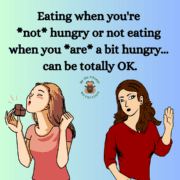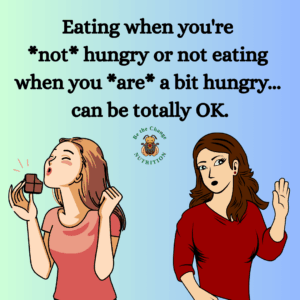
girl enjoying chocolate just because and another girl saying no thanks.

Sometimes eating isn’t about hunger. And that’s completely fine.

Are you confused yet?

Let me try to clear the air:
🍫 Eating when you’re *not* hungry can be OK.
🥗 Not eating when you *are* hungry can also be OK.

Wait… what?

Yup. While we often hear “listen to your hunger cues,” real-life eating isn’t always a straightforward, one-size-fits-all situation. Just like most rules in life, there are exceptions—and getting in touch with those gray areas can actually help you feel *more* confident about your eating decisions, not less.

🔍 Eating When You’re Not Hungry: Practical, Not Problematic

Welcome to the world of “practical” or “preventive” hunger—aka eating based on what your body *might* need, rather than what it’s yelling for in the moment.

Here’s what that might look like:
– Grabbing a snack before running errands so you’re not hangry in aisle 4.
– Eating lunch early because you’re heading into a meeting marathon.
– Refueling with protein and carbs post-workout—because your muscles are cheering for repair.
– Having dessert after dinner simply because… chocolate. Need I say more?

It’s not about ignoring your hunger cues; it’s about *anticipating* them. Choosing to eat in these moments helps you feel grounded, prepared, and well-fueled—not reactive and ravenous.

🤔 Slightly Hungry but Choosing Not to Eat: Also Valid

Now let’s flip it.

Sometimes you feel a nudge to nibble—but decide to wait. That doesn’t make you bad at “intuitive eating”—it makes you intentional. I’m talking about a very low level of hunger or a craving here.  Obviously if you’re truly hungry and in need of food you should EAT.  You always have the right to eat whenever you want to, but it’s also OK to sit with an urge and not respond to it.

For example:
– Skipping the candy dish because lunch is coming and you want to nourish yourself with higher quality food. (And deciding you’ll have some candy after you eat if you still want it.)
– Not eating right before bed because you are so tired and aren’t even sure if you are really hungry or just really tired.
– Passing on the bread the server put on the table because although you’re getting hungry, you want to fully enjoy the meal you ordered and you know if comes with a more enjoyable carbohydrate source.

In all these cases, it’s not about restriction—it’s about preference, self-awareness, and honoring how you want to feel afterwards.

🧠 The Sweet Spot: Pairing Knowledge with Intent

Whether it’s eating without physical hunger or pausing even when you feel a bit peckish, you’re blending nutrition wisdom with real-life nuance.

You’re allowed to enjoy food purely for taste. You’re allowed to pause and check in before acting on a craving. You’re allowed to eat proactively to avoid a slump later.

It’s not “right” or “wrong”—it’s about what feels aligned *for you* in that moment.

🥄 Final Thought: You’re In Charge

You always have the right to eat—and the right to wait. The goal isn’t perfection, it’s self-awareness.

So next time you find yourself asking, *“Should I eat this even though I’m not hungry?”*
Or, *“I’m kind of hungry but do I need something now?”*

Just know that either path can be valid. And that’s a pretty freeing way to live.


logo and note that i'm celebrating 10 years!

Wow, can you believe it?

I am thrilled to be celebrating an incredible milestone this June…

Ten amazing years of providing nutrition counseling services at Be the Change Nutrition in North Kingstown, Rhode Island!

Ten years ago I took a leap of faith and started my private practice. After gaining experience working as a registered dietitian in a physical therapy rehab clinic, a cardiology office, as a virtual RD for FitDay, a nutrition writer for Livestrong and at a local nutrition private practice, I decided it was time to set out and do my own thing.  As I celebrate this ten year mark, I find myself reflecting on the lessons learned, all the wonderful people I’ve met and the growth I’ve experienced– both personally and professionally.

Over the past decade my passion for helping people lead healthier, happier lives has only grown stronger. It’s been an absolute joy and a privilege to witness the transformative power of good nutrition firsthand, seeing my clients gain energy, confidence, self-awareness, improved health and a newfound love for nourishing their bodies.

I want to take a moment to express my deepest gratitude– to my clients, my colleagues, my mentors, my family and everyone who has supported me along the way. Your trust, encouragement and dedication have made this adventure so meaningful.

Here are 10 powerful lessons I have learned from guiding others in their health journeys:

🫶 Self-compassion is key: People often come to me with the belief that they need to hate and criticize themselves into change– but I’ve seen that the most successful transformations happen when my clients give themselves grace and self-care instead of guilt, shame and self-loathing.

🪜 Small steps lead to big results: Change isn’t about drastic overhauls; it’s about sustainable shifts and consistency. Nutrition isn’t about chasing perfection; it’s about progress, patience and building long-term, practical habits that feel good and support lasting well-being.

✨ Nutrition is not one size fits all: There is no one perfect way to eat. What works for one person may not suit another. Generic diets often fail because they don’t account for personal preferences, making individualized advice more practical and sustainable. Getting to know each client and providing them personalized nutrition is essential.

🍪 There are no ‘good’ or ‘bad’ foods: Any food can fit into a healthy diet. It’s all about creating balance, not restriction. Labeling foods as good/bad can lead to an unhealthy relationship with food and eating. Focusing on moderation, variety and nourishment allows for a more positive approach to health. Overall dietary habits are what matter the most.

📝  Meal plans aren’t helpful: Everyone thinks they need one, but in reality, few actually stick to them. Clients need guidance, but not a strict diet plan. Instead, it’s more useful to help them build the knowledge and confidence to make flexible, independent choices about food, so they can customize their nutrition in a way that works for their lifestyle.

💪 Weight loss does not necessarily equal happier and healthier: The scale isn’t the ultimate measure of success. And with up to 70% of body weight being determined by genetics, there is only so much that is controllable. Dig deeper and ask WHY weight loss is a goal. Improved strength and stamina, restful sleep, better digestion, mood balance, increased energy, elevated self-esteem, optimized metabolic health markers and a commitment to self-care matter far more than any number on a scale.

🥰 Food should be nourishing, not punishing: Helping clients build a positive relationship with food has been one of the most rewarding aspects of my practice. Food is more than just fuel; it also carries emotional, cultural and social significance that impacts eating habits. Connect with the body through trust, respect, kindness and honoring its cues. Food is meant to nourish, satisfy and bring pleasure, not be a source of fear, confusion or stress.

🤗 Behavior change is the real challenge: Knowledge isn’t usually the problem– people generally know that they should eat healthier. Working with clients to navigate emotional eating, unhelpful habits and motivation struggles is just as important as teaching them about macros and micronutrients.

🎯 A supportive partner is a game changer for success: Having the accountability of meeting regularly with a dietitian helps staying consistent with healthy changes far more achieveable. Instead of feeling stuck, clients gain practical solutions to overcome obstacles. Rather than having vague goals like ‘eat healthier,’ dietitians help set specific strategies that lead to measurable success.

💞 Health goes beyond diet: Health isn’t just about the food on your plate; it’s about how you feel, how you move, how you rest and how you show up for yourself.  Movement, stress management, sleep and mental wellness all play crucial roles in overall well-being. Nutrition is so much more than just ‘eat this, not that’– it’s about balance, mindset and creating a lifestyle that aligns with whatever your personal values may be. And it’s about finding joy in the process!


Here’s to the next decade of helping others embrace healthy living and become their happiest, healthiest selves!

Thank you for being a part of my life. ❤️
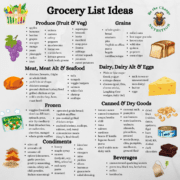
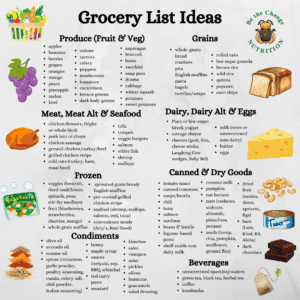
grocery list ideas, broken down by category

 You wouldn’t believe how often I hear:

“I don’t know what to buy when I go to the grocery store.”

So, here you go: A printable grocery list!

I put together a list of foods by category to provide some IDEAS.

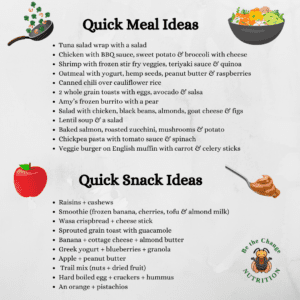
 I also included some quick meal and snack examples using foods from the shopping list.

There are dozens of other meals/snacks you can create by combining items on the list.

list of quick meal ideas

 Stock your pantry, fridge and freezer with as much VARIETY as you can– You’ll have that many more options when it comes to preparing something to eat.

🤔 Do you need to buy everything on the list? No!
👉🏻 It’s meant to give you IDEAS and inspiration. Don’t feel you need to buy things you don’t like.

🤔 Are there things not included on the list that you can buy? Of course!
👉🏻 Shop with the 80/20 rule in mind (same with when you eat), meaning aim for 80% of your foods to be wholesome, nutrient-dense choices and 20% to be fun, pleasurable, foods that you eat just because you truly just love them! 💗

Happy shopping🛒

Print your Grocery List with Meal Ideas HERE

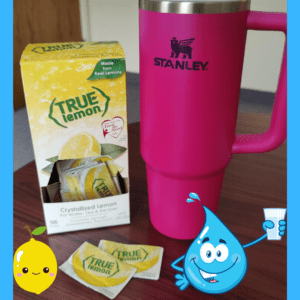
Stanley water cup and True Lemon packets.

I always ask my clients what they drink & how much… And sometimes drinking more water goes on their to-do list!

👉 We are about 60% water! 💦

Adequate hydration is essential for:
💦 Transporting nutrients in the body
💦 Lubricating joints
💦 Digesting food
💦 Regulating body temperature
💦 Supporting kidney and bladder health
💦 Eliminating wastes through sweat, urine and bowel movements

🥤 It’s important to be well hydrated, but be careful not to take it too far by forcing yourself to drink excessively. This can dilute your electrolytes and cause central nervous system issues (and even death–although it’s rare).

Fluid recommendations from The National Academy of Sciences for generally healthy adults:
💦 15.5 cups/day for men
💦 11.5 cups/day for women

This includes water from food, which contributes about 20% of daily hydration.

Not taking food into account, our fluid needs are about:
💦 11 cups/day for men
💦 9 cups/day for women.

☕🍵And yes, coffee and tea count!!
(Keep caffeine under 400mg/day)

💧 Dehydration can cause: headaches, lack of energy, constipation, kidney stones and urinary tract infections.

🥵 Any activity or hot weather that causes you to sweat means that you need to drink more fluids to replace what you lose.

🟡 The color of your urine is a good way to check your hydration. It should be a pale yellow. Dark yellow or amber may indicate you need to drink more.

🥰 And lastly, don’t forget the obvious:
Pay attention and listen to your thirst!

💙Drink enough
💙Not too much
💙 Mostly water

Bonus tip:

🍋If you’re prone to kidney stones, try adding True Lemon to your water (or fresh lemon or lime juice).  Lemon and lime juice contain citrate which may help prevent kidney stones. I always have samples here at my office if you’d like to try it.

Full vs satisfied emojis

Eating is not just about feeling FULL.

It’s about feeling SATISFIED! 😄

🌟There’s a difference.

Full = a physical sensation.
Your belly could feel full but you may not be satisfied.

Satisfied = a mental sensation.
It’s about feeling GOOD after eating! You feel nourished. You may or may not feel full, but you do feel satisfied and are not feeling like you still need something more.

💫 Shooting for satisfaction means you’re less likely to overeat or be preoccupied with food between meals.

👇Tips for feeling satisfaction after eating:

🍽️ Eat a combo of protein, carbs and fat…
Not necessarily all the time, but it does promote satiety and satisfaction.

🍽️ Ask yourself what would really taste good to you…
Maybe you have a “balanced” meal that would fill you up but to make it more satisfying you decide to add some flavors like goat cheese, salsa, guacamole, fresh herbs or butter.
Or you decide some chocolate or a brownie would really round out the meal. Have it! 😋

🙂 Allowing pleasure with food = Satisfaction = Nourishment =
A healthy relationship with eating!

We need both NUTRIENTS AND PLEASURE with our food choices…
Aim for a combo/balance of BOTH! ⚖️

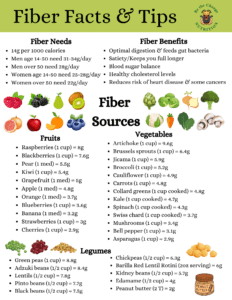
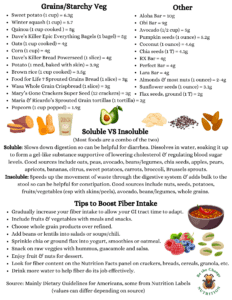
A FREE printable handout that I use in my practice to educate clients on:

✅Fiber needs/recommendations

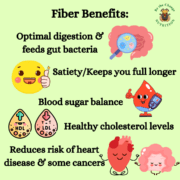
 ✅Health benefits of fiber

✅Soluble VS insoluble fiber

✅Good sources of fiber

✅Tips to boost fiber intake

Handout with fiber needs, fiber benefits and fiber sources.

Fiber handout with fiber sources and tips to boost fiber intake.

Click here to print your free Fiber Facts & Tips


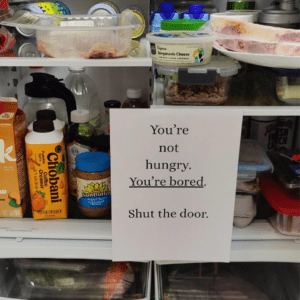
sign in fridge that says You're not hungry. You're bored. Shut the door.

😂 It’s not a bad idea.

But you don’t need a sign in your fridge–

Instead, get in the habit of asking yourself if you’re truly hungry every time you wander into the kitchen looking for a distraction.

🤔 Is grabbing something to eat really what you’re looking for?

🤔 Or is it just an urge that you can either sit with or deal with through an alternate action?

🥱 Can you eat when you’re feeling bored? Of course you can!
But make it a mindful, conscious decision that you feel good about.

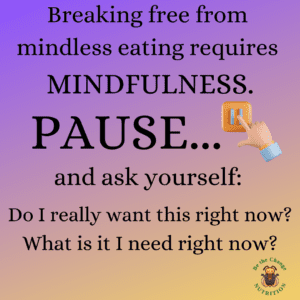
🔑 The key to stopping any mindless behavior is mindfulness (aka paying attention).

Mindfulness is the opposite of autopilot. It generates self-awareness and autonomy. You always have a choice. Insert a pause right before automatically reaching for food. This pause is what gives you the power to act or not act in response to your thoughts and feelings.

Mindfulness comes up a lot in nutrition counseling.

(Balance too!) 🙂

🥺 Many of my clients struggle with unwanted eating behaviors like grazing between meals when not hungry or eating after dinner out of habit.

There’s nothing necessarily wrong with doing these things…

➡️ But for a lot of people, they don’t feel like they are in control, these habits are getting in the way of their health and/or weight loss goals– And that doesn’t feel good to them.

💫 When it comes to changing eating habits, introducing mindfulness is essential.

It is the first step towards behavior change.

👁️ All mindfulness really means is: PAYING ATTENTION.

Behavior changes can’t happen without this.

You can’t change what you’re not noticing.

⏸️ Pause before automatically reaching for food.

Check in with your body.
⬇️⬇️⬇️⬇️⬇️⬇️⬇️

Am I hungry? 🤔
What am I feeling right now? 🥱
Do I really want to eat this? 🤨
What sounds good to my body right now? 🧐
How much of it do I need to feel the way I want to feel? 🥰
If I’m not hungry, what is it that my body is calling for? 🤯

💫 You’re interrupting a habitual behavior by bringing in awareness and creating an opening for a different response.

The PAUSE is where mindfulness happens. 👀

And mindfulness is how change happens. 🪄

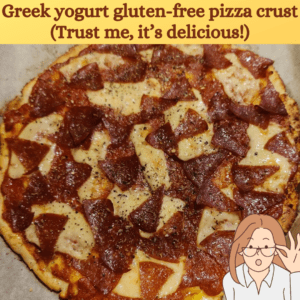
This one’s become a regular in my kitchen—I’ve made it multiple times and it’s consistently amazing.

Holds together perfectly, unbeatable flavor, and totally dietitian-approved!👍🏻👍🏻

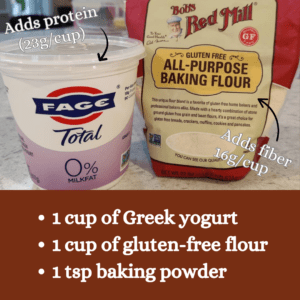
Ingredients: gluten free flour and greek yogurt

😍 What I love:

Greek yogurt in the crust = sneaky protein boost!
I don’t always pile protein on my pizza, so this trick helps balance things out… brilliant.

Plus, Bob’s Red Mill GF Flour (made with chickpeas, sorghum, and fava beans) adds fiber—something pizza usually skips.
Protein + fiber = satisfaction that lasts.

👨🏻‍🍳 Here’s how…

3 ingredients for the dough:

1 cup Greek yogurt

1 cup gluten-free flour

1 tsp baking powder

Add in some garlic powder if you’d like

Preheat your oven to 400.

Mix together dough ingredients with a spoon and then knead together with your hands.

It will be sticky! Add a little olive oil on your hands to help prevent sticking.

Shape the dough into a pizza crust on parchment paper placed on a baking sheet.

I like to another piece of parchment on top of the dough and roll it out flat with a rolling pin.

Bake for 10 minutes.

Remove from the oven, carefully flip the pizza crust over and bake for another 5-10 minutes.

Remove from the oven, add tomato sauce, cheese and any other toppings and return to the oven for about 5-10 more minutes until the cheese is melted.

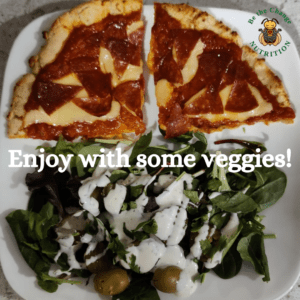
Serve with salad or any cooked/raw veggies! 

2 slices of pizza with a green salad

Mug of ramen noodles with spinach, peas and peanut butter.

 There are always ways to nutritionally improve any of your favorite foods– even ramen!

🍜 Tips to Making a Healthier, Balanced Ramen Noodle Soup:

🍤🫘 Add a protein source like chicken, tofu, tempeh, edamame, shrimp or hard boiled eggs. Consider black beans, chickpeas, lentils, cannellini beans or peas too– while these aren’t quite as high in protein, they still provide health promoting plant-based protein plus the benefits of fiber.

🥬🍄 Mix in some frozen spinach for antioxidants and additional vitamins, minerals and fiber. Thaw first by rinsing in a colander– or add it frozen to your hot soup to cool it quicker. Try cauliflower rice, peppers, mushrooms, carrots or mixed veggies for additional nutrients.

🥄🥜 Stir in a big spoonful of peanut butter, almond butter, cashew butter or sunflower seed butter for healthy fats and satiety– this makes your soup creamier and absolutely delicious.

🧂🤏 Use less of the seasoning packet if you’re looking to reduce sodium in your diet. Ramen seasonings vary in sodium content so check your label. If it’s got 20% or more of the recommended daily value it’s considered high-sodium. You can still use the whole packet; it’s just smart to be aware of how many high-sodium foods you’re eating over the course of your day.

🔎 👀 Read the ingredients to see what you’re getting. I like the Lotus brand that makes ramen from whole grains like brown rice, millet and buckwheat vs enriched wheat flour and oil, so you get a little more fiber…

Rice ramen noodle packet by Lotus FoodsNutrition facts panel for Lotus Foods ramen noodles.

🤫 They’re at Job Lot now for $1!

 Remember: Protein, fat and fiber help keep you full longer. If satiety is a goal, add these to your carb-rich meals and snacks to turn down your hunger hormones.


    making date sweetened cranberry sauce compared to white sugar

    health benefits of cranberries and dates

    Make cranberry sauce the way YOU like it-

    But here is an option if you’re looking to obtain the health benefits of cranberries without any added sugar.

    chopping dates and adding water to start the sauce

    simmering the sauce to break down the dates and cook the cranberries.

    ❤️ Cranberries contain proanthocyanidins, a chemical compound that gives them their bright color. This inhibits bacteria from sticking to cells lining the urinary tract, so they may help prevent UTIs.

    ❤️ Cranberries are also loaded with polyphenols that have anti-oxidant and anti-inflammatory properties.

    ❤️ Cranberry sauce doesn’t have to be enjoyed only on Thanksgiving day. You can use it as a side dish with any meal, on salads or add it in wraps or sandwiches. It even makes a delicious and nutritious topping to your breakfast oatmeal! 🥣


    a note about sweetness and how it's relative and can taste buds can be reset.